


Moving during winter presents unique challenges. You will need to do some extra planning because of the cold weather. Conditions such as snow, ice, and freezing temperatures can affect your packing, transportation, and safety. Still, with the right winter moving preparation, you can reduce the hazards, protect your belongings, and keep your move on track even when conditions are unpredictable.
A successful winter move depends on timing, safety precautions, and realistic expectations. Planning ahead helps you manage winter moving logistics and avoid last-minute decisions that may be less than ideal.
Is it safe to move during the winter?
Moving in the winter can be safe once you take the proper precautions. The biggest winter moving hazards come from slick surfaces, reduced daylight hours, and cold exposure. Ice and snow increase the risk of slips and falls, while freezing temperatures can affect people, pets, and belongings.
Safety starts with monitoring weather and road conditions. Building flexibility into your winter moving timeline and preparing walkways ahead of time reduces the chances of injuries or delays.
Tip: Schedule your move earlier in the day to maximize daylight and avoid refreezing after sunset.
How do you prepare for a winter move?
Winter moving preparation starts well before your moving date.
Outside your home:
- Remove snow and ice from driveways, sidewalks, and entryways to make a clear path for your move team.
- Apply salt or deicer to reduce the risk of falls.
- Ensure heating utilities are active in both homes to protect temperature-sensitive items.
Inside your home:
- Cover floors with runners or cardboard to protect them from water damage from wet or snow-covered shoes.
- Make sure you have warm clothes, gloves, and boots easily accessible to keep family members warm during loading and unloading.
Tip: Have extra salt, shovels, and towels on standby. These will come in handy if weather conditions change during your move day.
What are the best tips for moving in snow and ice?
Stability and control are the most important things to consider when moving in snowy or icy conditions. Walk slowly, use proper lifting techniques, and avoid rushing. Keep paths clear and well-lit, and clearly communicate any hazards to anyone assisting.
When moving in snow and ice, stage items indoors when possible to limit exposure. Reduce the number of outdoor trips and bring items to a covered area before loading the moving truck.
Tip: Use high-traction mats at entryways to reduce slipping while carrying heavy items.
What should I pack differently when moving in winter?
Tips for packing for a winter move include using insulation and weatherproofing. Freezing temperatures and moisture can affect your electronics, artwork, and wood furniture, so use protective coverings, plastic wrap, and padded blankets to reduce condensation and cold-related damage.
Liquids and certain household items can crack or leak in freezing temperatures. Pack them separately and transport them in a climate-controlled vehicle when possible.
Tip: Label boxes with temperature-sensitive items so they’re loaded last and unloaded first.
What items need extra protection during a winter move?
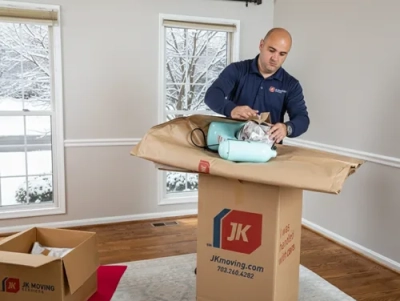 Protecting furniture in a winter move requires extra care. Wood, leather, and upholstered pieces can absorb moisture and warp if exposed to snow or cold air. Mattresses should be fully wrapped to prevent water damage.
Appliances may need time to acclimate after cold transport. Allow them to reach room temperature before plugging them in to avoid mechanical issues.
Tip: Let appliances sit indoors for several hours before use.
Are winter moves cheaper than summer moves?
Reduced demand in winter months often means lower moving costs. Look to book your move for midweek or midmonth, when moving companies have more flexibility in their scheduling.
While lower costs can be appealing, balance savings with safety planning. Budget for winter moving supplies, potential weather delays, and extra preparation time.
Tip: Weigh cost savings against flexibility and safety when choosing a winter move date.
How do professional movers manage winter conditions?
Professional movers plan for cold climate challenges by providing comprehensive training to their teams that includes safety and risk management processes. Additionally, professional movers have the necessary equipment to safely transport your belongings to your new home, regardless of the weather. Crews monitor forecasts, adjust routes based on road conditions, and protect your items while packing.
Moving trucks are prepared for winter driving, and teams follow safety protocols for moving on ice and snow to protect both people and belongings.
Tip: Ask your moving company about winter safety procedures and weather delay policies before booking.
How do I prevent slips and injuries on moving day?
Injury prevention is essential during any move, but especially during the winter months, when slips and falls are common. Here are some safety tips to avoid injury on your move day:
- Wear boots with good traction
- Use gloves for grip and warmth
- Take breaks to avoid fatigue
- Clear walkways repeatedly because snow and ice can reaccumulate
Assign one person to monitor safety conditions, reapply salt, and adjust plans if the weather worsens.
Tip: Slow down. Rushing is a common cause of winter moving injuries.
What should I do if there is a snowstorm on moving day?
If it snows on your moving day, you may need to be flexible. If conditions become unsafe, you may need to postpone your move. The safety of you, your move team, and your belongings must be the top priority. Communicating clearly with your moving team will help manage weather delays and protect everyone involved.
If the move proceeds, prioritize safety over speed and keep emergency supplies accessible.
Tip: Build a buffer day into your winter moving timeline in case rescheduling is needed.
Can freezing temperatures damage my belongings during a move?
Moving in freezing temperatures can damage certain items if they’re not protected. Electronics, liquids, and fragile materials are most at risk. Proper insulation, short exposure times, and climate-controlled transport help reduce damage.
Planning for climate considerations allows you to focus on preventing damage rather than post-move repairs.
Tip: Transport high-risk items personally when possible.
Planning a safer winter move
Moving during winter takes extra preparation, but it doesn’t have to be stressful. With a clear winter relocation checklist, attention to safety precautions, and realistic planning, you can manage snow, ice, and cold weather effectively. Working with a professional mover helps households navigate winter moves with experienced crews, careful planning, and logistics designed to reduce risk and protect belongings in challenging weather conditions.