
Vendor selection mistakes have a way of compounding. What starts as a missed deadline or a communication breakdown can quickly become an operational disruption, a compliance issue, or a reputational problem. For procurement teams sourcing moving, storage, and logistics partners, the margin for error is thin – and the consequences of a bad fit tend to show up at the worst possible time.
A strong vendor vetting checklist helps you separate qualified partners from risky ones before a contract ever gets signed. Here’s what every procurement team should evaluate.
Free download: Vendor qualification scorecard
Score any vendor across 4 weighted categories, get a risk rating out of 100, and make the call with confidence.
Complete the quick form for instant access.
Why vendor vetting matters more than ever
Third-party risk has grown significantly in recent years. In fact, a recent data breach report from Verizon shows that breaches involving a third party jumped to 30% of all incidents, up from roughly 15% the previous year. That cybersecurity concern reflects a broader truth: when you bring in an outside vendor, you inherit a portion of their risk.
For moving and logistics specifically, the operational risks are just as pressing. Vendors managing your physical assets, sensitive records, or high-value equipment need to meet a higher bar than a simple web search can reveal.
Tip: Define your organization’s risk tolerance in writing so every vendor candidate gets evaluated against the same internal standard.
Core criteria for your vendor vetting checklist
A good supplier evaluation checklist covers four risk categories: financial, operational, compliance, and reputational.
- Financial stability: Start with audited financial statements or a credit report. A vendor that struggles through a slow quarter may not have the stability to manage a multi-phase relocation without cutting corners. Look for consistent revenue, manageable debt, and adequate insurance coverage. For moving and logistics vendors, cargo liability limits and general liability minimums matter.
- Operational capacity: Ask detailed questions about staffing, equipment, and how much of the actual work gets handed off to subcontractors. Heavy reliance on unvetted subs is one of the more common ways vendor quality breaks down in practice. Any subcontractor in the mix should be licensed, insured, and held to the same standards as the primary vendor. JK Moving’s supplier network standards offer a useful benchmark: partners must carry proper licensing and bonding, and performance is graded before, during, and after each engagement.
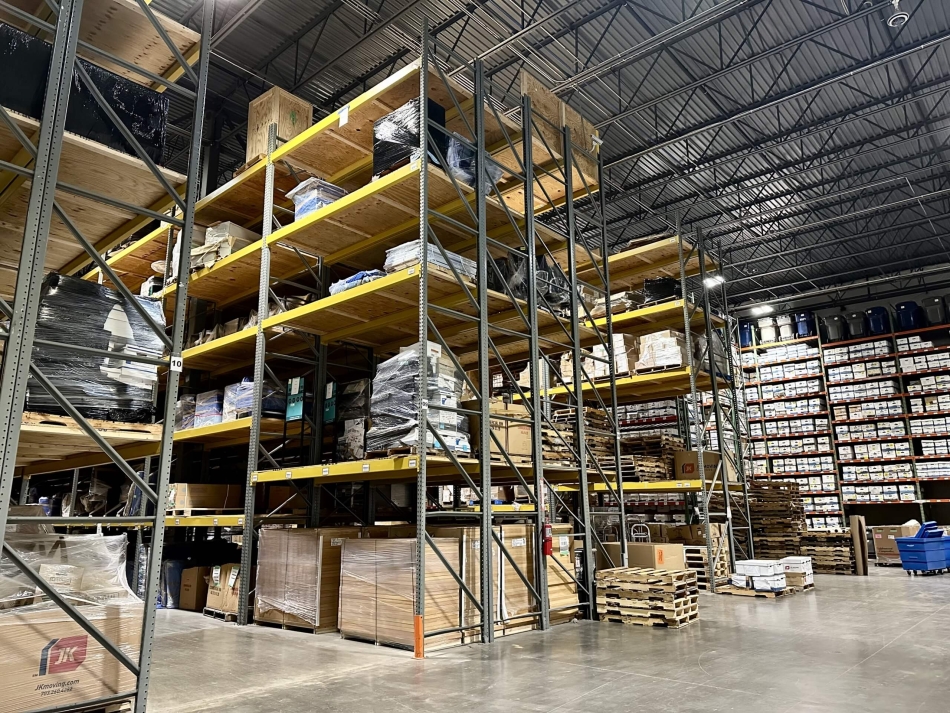 Compliance posture: It’s important to verify vendor licensing (including FMCSA registration for interstate movers, OSHA compliance history, and relevant industry certifications) in addition to reviewing. For storage and records management, confirm whether facilities meet government-rated standards. JK Moving’s commercial storage facilities carry a government-rated designation, with climate control, 24/7 surveillance, and documented chain-of-custody protocols.
- Reputational standing: Check third-party review platforms, the Better Business Bureau, and relevant trade associations, and look for complaint patterns, not just individual incidents. A vendor with recurring claims around damaged goods, missed timelines, or billing disputes is showing you who they are.
Tip: Don’t rely on vendor-supplied references alone; search for reviews on platforms the vendor doesn’t control.
What documents to request during the vetting process
Conversations don’t create accountability, documentation does. Before any vendor relationship moves forward, request:
- Proof of licensing and insurance, with your organization listed as an additional insured where applicable
- Safety certifications and staff training records
- Subcontractor agreements and vetting criteria
- Claims history for the past 24 to 36 months
- Service level agreements and escalation procedures
- References from comparable engagements
For corporate relocation services or large-scale warehousing and logistics contracts, also request a sample project management plan and any applicable business continuity documentation.
Tip: Claims history is one of the most revealing documents a logistics vendor can provide. A low quarterly claims ratio signals both quality execution and honest self-reporting.
Vendor performance evaluation doesn’t stop at onboarding
The supplier selection process shouldn’t be a one-time event. Build re-evaluation checkpoints into every vendor contract: at six months, annually, and whenever scope substantially changes. Track on-time performance, damage rates, billing accuracy, and responsiveness. Document everything.
Procurement teams that treat vendor management as ongoing rather than episodic catch problems earlier and maintain better negotiation leverage.
Tip: Set calendar reminders for vendor review dates at the time of contract signing. Don’t wait for a problem to trigger a re-evaluation.
Choosing a moving and logistics partner built to pass the test
When selecting a moving and logistics partner, look for certified teams, government-rated facilities, and documented quality standards for every commercial engagement. Whether you’re managing an office relocation, scalable commercial moving services, or long-term storage and distribution, do the research to find a partner that meets the standards your procurement team should be requiring.