

Protecting your space is just as important to us as protecting your belongings. Whether it’s a brand-new office build-out or a historic building with original hardwood, our crews take extra care with the surfaces you can’t afford to damage.
Why building protection matters
Commercial moves come with a level of risk that residential moves usually don’t – marble lobbies, freshly finished hardwood, high-gloss tile, and flooring that a property manager or landlord expects to hand back in the same condition it was delivered. A single scratch, chip, or water stain during a move can turn into a liability conversation nobody wants to have. That’s why proper surface protection is part of how we plan every commercial job from the start.
The problem with traditional Masonite
For years, Masonite was the industry standard for floor protection, and it did the job well enough. But it comes with some real downsides. It’s heavy, which slows crews down and makes handling less safe. It chips and cracks under repeated use, leaving dust and debris behind. And it doesn’t hold up well around moisture. Carpet installers often use water to stretch and set new carpet, and that same water can cause Masonite to curl at the edges. A curled edge doesn’t just look bad; it’s a trip hazard on an active job site.
Our solution: Polynite®
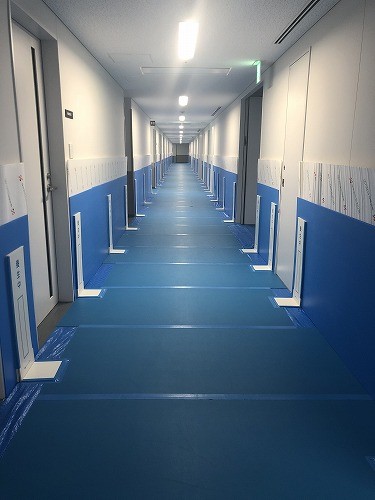 Back in 2018, JK made the switch to Polynite® for surface protection – and years later, it’s still paying off. Polynite has become our go-to alternative to Masonite, and it’s not hard to see why once you’ve used both.
Here’s what makes Polynite® the better choice:
- Cleaner: No cracking or chipping, so you’re not left sweeping up dust and debris afterward.
- Lighter: Crews can carry, position, and install it faster, which keeps projects moving without sacrificing quality.
- Built to last: It holds up under heavy use and protects flooring for up to a decade.
- Water-resistant: It won’t curl when carpet installers use water during installation, so there’s no risk of edges lifting into a trip hazard.
- Practical sizing: At 32 inches wide, it fits through standard doorways without the awkward cutting and piecing other materials sometimes require.
- Better for the planet: It’s made from recycled materials, so protecting your space doesn’t come at the environment’s expense.
Masonite vs. Polynite® at a glance
| Masonite | Polynite® | |
| Weight | Heavier, slower to install | Lightweight, faster installation |
| Durability | Chips and cracks over time | Holds up for up to 10 years |
| Moisture resistance | Curls with water exposure | Stays flat, no curling |
| Doorway fit | Often needs cutting | 32″ width fits most doorways |
| Environmental impact | Not recycled | Made from recycled materials |
Our building protection Process
- Walkthrough: Before a single box moves, our crew leads walks the space to identify surfaces that need protection, including flooring, elevators, doorframes, and stairwells included.
- Install: Sensitive surfaces like marble, hardwood, slate, and high-gloss tile are covered with Polynite® and secured with duct tape to prevent shifting throughout the move.
- Move day: Crews work around the protected areas, keeping foot traffic and equipment on covered paths wherever possible.
- Removal and inspection: Once the move is complete, protection is removed and surfaces are inspected together with the client or property manager.
Frequently asked questions
Does building protection cost extra?
It depends on the scope of the move and the building’s requirements. Our team will walk through this with you during the estimate process so there are no surprises.
Do I need to request this, or is it automatic?
For commercial moves, our crews typically assess and recommend protection as part of the planning process, especially in buildings with sensitive flooring or strict property management requirements.
What surfaces can Polynite® protect?
Marble, hardwood, slate, high-gloss tile, and most other finished flooring types. It’s also commonly used in elevators and along high-traffic pathways.
How long does setup take?
This varies by building size and layout, but our crews are trained to install protection efficiently so it doesn’t add significant time to the overall move.
Protecting what Matters
Building protection is a small detail in the bigger picture of a move, but it’s the kind of thing our crews think about so you don’t have to. It’s one more piece of the planning that happens long before moving day, so that when the boxes start moving, the building looks the same as it did before anyone walked in.