


Moving to a new home – whether it’s a new job, a better neighborhood, or more space – usually feels like an opportunity for adults. For children, it can feel very different. They may worry about leaving friends, changing schools, or losing the routines that make them feel secure.
When it’s time to talk to your kids about moving, it’s much more than just sharing the news. It’s about helping them understand what’s changing while reassuring them they won’t face those changes alone.
It’s normal – and expected – for kids to feel anxious, sad, frustrated, or even excited about the upcoming move. To help them build resilience and adjust more confidently to their new home, parents must approach the conversation with honesty and empathy.
Why children struggle with moving
Most of the time, kids aren’t upset about the new house. It’s not the fresh paint or the different bedroom layout they’re mourning. It’s everything they’re leaving behind – friends, beloved teachers, sports teams, familiar hangouts, and the daily routines that give a child’s life structure.
Younger kids tend to struggle most with the uncertainty of not knowing what comes next, while older kids and teenagers focus more on the relationships they’re leaving behind. Keep in mind that every child processes that differently. Some ask endless questions. Others become quiet or withdrawn. Some may act out. Those reactions aren’t defiance; they’re usually just stress showing up in the only way a kid knows how. Seeing their emotions for what they are is the first step toward helping your kids adjust.
Tip: Resist the urge to immediately “fix” their feelings if your kids are upset. Simply acknowledging that moving is hard can help them feel heard and understood.
How to tell kids you’re moving
Once your plans are firm, have the conversation sooner rather than later. Giving children time to process the news helps reduce anxiety and prepares them emotionally.
Make sure you are honest with your kids and that you use age-appropriate language. Explain why you’re moving without overwhelming younger children with adult-level worries they aren’t equipped to understand. Reassure them that it’s okay to have mixed emotions. The goal isn’t to send your kids away from the conversation feeling excited or convinced about the move. It’s to make sure they know the door is open, and that whatever they’re feeling next week or next month, they can still bring it to you.
Helpful conversation starters include:
- “What’s the part you’re most worried about?”
- “What do you think you’ll miss the most?”
- “What questions do you have about our new home?”
These open-ended questions encourage children to share concerns they might not volunteer on their own.
Tip: Expect to revisit the conversation more than once. Children often process major life changes gradually rather than all at once.
Supporting children at every age
Children’s needs change with age, so your approach should too.
Toddlers and preschoolers
Young children thrive on routine and most likely won’t fully understand why you’re moving. Use simple language, keep daily routines as consistent as possible, and make sure they understand that the people and belongings they love won’t be left behind — they’ll be coming with them.
School-age children
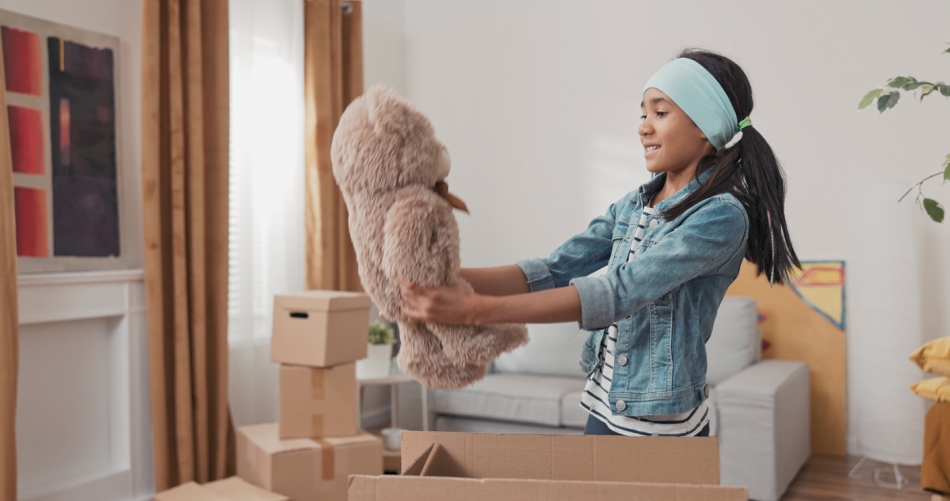 It’s not uncommon for school-age children to worry about leaving friends or going to a new school. You can help them gain a sense of control by involving them in simple moving decisions, such as packing favorite belongings or decorating their new room.
Preteens and teenagers
Teenagers often feel the loss of friendships most deeply. Don’t minimize those feelings. Work together on finding ways they can stay connected with old friends while creating opportunities to build new relationships after the move.
Tip: Giving children meaningful choices, even small ones, can help them feel like participants in the move rather than passengers.
Helping kids adjust after moving day
The adjustment to a big move doesn’t end once the truck pulls away. Many children need several weeks or even months to feel fully settled.
One of the best things parents can do is get back to normal as quickly as possible. Unpack the kids’ rooms first, so they have a familiar place to retreat to, pick up everyday routines again, and start exploring the new neighborhood together. If a school change is part of the move, it’s worth reaching out to teachers or school counselors before classes begin.
Maintaining connections with old friends through phone calls, video chats, or occasional visits can also make the transition feel less overwhelming.
Tip: Familiar routines often provide more comfort than perfect unpacking. Focus on meals, bedtime, and family traditions before worrying about every unopened box.
Mistakes to avoid when helping children through a move
Even well-intentioned parents can make these conversations harder.
Try to avoid:
- Dismissing your child’s worries with “You’ll be fine.”
- Promising they’ll immediately love their new home.
- Comparing one sibling’s reaction to another’s.
- Expecting children to adjust on the same timeline as adults.
- Avoiding difficult conversations because they’re uncomfortable.
Children don’t need every answer. They need confidence that their parents will continue supporting them throughout the transition.
Tip: Listening without immediately offering solutions often builds more trust than trying to convince children they shouldn’t be upset.
When a child may need additional support
Most children gradually adjust to a move with time, patience, and consistent support. However, prolonged emotional distress may signal that additional help would be beneficial.
Consider speaking with your child’s pediatrician or a qualified mental health professional if you notice persistent signs such as:
- Ongoing withdrawal from family or friends
- Significant sleep problems or nightmares
- Refusing to attend school
- Lasting sadness or anxiety that doesn’t improve
Seeking support early can help children develop healthy coping strategies during major life transitions.
Tip: Asking for professional guidance is a proactive step, not a sign that you’ve handled the move incorrectly.
Honest conversations build confident transitions
Moving is one of the biggest transitions a family can experience. By listening carefully, validating emotions, and preparing children for each stage of the journey, parents can help replace uncertainty with confidence.
When you’re ready to plan your move, look for an experienced moving partner to help make the transition as smooth as possible.