


Moving is one of those things that feels manageable until you’re actually in the middle of it, and packing is usually where things start to go sideways. Knowing what to pack, what to leave behind, and what to keep close can make a real difference on moving day. Here are some essential guidelines to help you pack smart and avoid the most common mistakes.
It’s common sense; you know you can’t pack everything, but sometimes it’s easy to forget. So keep these moving safety tips handy. Have a question about an item? Contact your move coordinator.
What to keep with you
JK is committed to delivering you a worry-free residential move. That’s why there are certain items we can’t load onto our trucks or place into storage, such as:
- Cash
- Jewelry
- Credit cards, Social Security cards, and licenses
- Legal documents such as deeds, wills, and car and home titles
- Medical records
- Irreplaceable mementos, such as photo albums
Items that can’t go on the truck
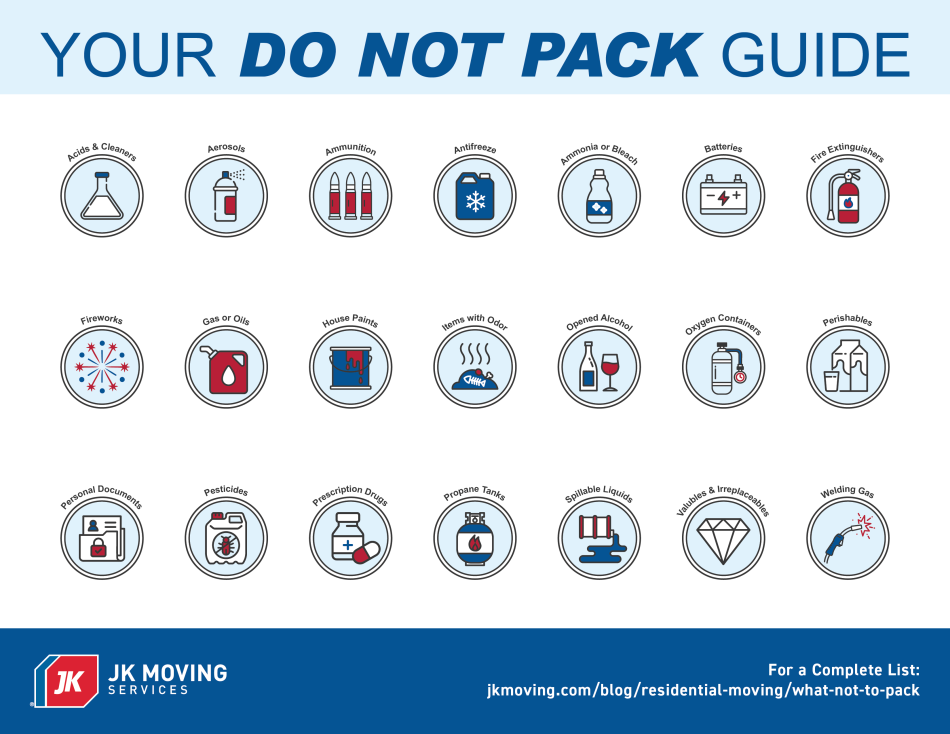
There are some things that should not make the move at all because they’re too dangerous to ship in trucks, air cargo planes, or shipping containers. Your move coordinator will help you find ways to store, personally transport, or dispose.
Hazardous Materials
Certain substances can pose significant risks during the moving process. These include:
-
-
- Flammable items: Such as gasoline, lighter fluid, and propane tanks.
- Chemicals: Paint, fertilizers, and pesticides can be dangerous and are typically prohibited by moving companies.
- Batteries: Car batteries and other rechargeable batteries can leak or explode.
-
Tip: Check local regulations for disposal guidelines and take hazardous materials to a designated facility.
Perishable Food
While it may be tempting to pack up your pantry, perishable food can spoil and create a mess during the move. Avoid packing:
- Fruits and vegetables: These can go bad quickly, especially during long-distance moves.
- Frozen items: Meat, dairy, and other frozen goods can thaw and spoil.
- Open food containers: Unsealed jars and boxes can leak and cause damage.
Tip: Plan to consume or donate perishable items before moving day.
Furniture and Large Appliances
Some items may not be suitable for moving due to their size or fragility. Consider leaving behind:
- Old or damaged furniture: If it’s not in good condition, it might not be worth the effort to move.
- Large appliances: If they’re outdated or inefficient, consider buying new ones for your new home.
Tip: Measure your furniture and doorways to ensure everything will fit in your new space.
Plants
Many moving companies have restrictions on transporting live plants, as they can be sensitive to changes in temperature and light.
Tip: If you can’t bear to leave your plants behind, consider taking cuttings or repotting them into smaller containers that can be easily transported.
Pets
While your furry friends are part of the family, moving them requires special consideration.
- Safety: Pets can become stressed during a move and may escape if not properly secured.
- Travel arrangements: Make sure you have a plan for transporting your pets safely.
Tip: Consider booking a pet sitter or a separate travel plan for your pets on moving day.
Moving day essentials: A quick reference checklist
To stay organized and set yourself up for a successful moving day, keep these essentials in mind:
- Heavy items: Use proper lifting techniques and let your movers take care of the heavy stuff – that’s what they’re there for.
- Sturdy boxes: Invest in quality moving boxes. Overpacked or flimsy boxes are one of the most common causes of damage
- Packing supplies: Stock up on tape, markers, and packing paper before you start packing. Running out mid-pack is a real momentum killer.
- Fragile items: Wrap breakables individually in bubble wrap or packing paper and clearly mark those boxes, both on the top and the sides.
- Labels: Label every box with its contents and destination room. Future you will be very grateful.
- Pack for a Move: Organize and pack systematically.
- Clothing: Wardrobe boxes let you move hanging clothes without folding – worth it for anything you’d normally dry clean.
- Trash bags: Keep a supply of trash bags handy for last-minute clutter, packing scraps, and quick cleanup on moving day.
- Start early: Begin packing non-essentials well in advance. Most people underestimate how long packing actually takes. Following a packing checklist can help keep you organized.
Here’s a handy flyer you can download or print to remind you of our packing tips for moving safety.
A little preparation goes a long way when it comes to packing. For more helpful guidance, browse our moving tips and relocation guide — and when you’re ready, our team at JK Moving Services is just a call away.