


Moving can be especially hard on kids. Depending on where you move, they may have to change schools, change routines, and leave their friends. Ideally, your move is planned for the summer so your kids can start the school year along with other students. Starting school at the same time as the rest of the neighborhood kids will allow your kids to make new friends and return to a normal schedule more quickly.
However, not all moves are so easily arranged. Whether your move is during the summer or during the school year, there are several steps you can take to help alleviate your children’s apprehension about the move, making the move less challenging for the whole family.
Before the move: How to prepare your kids
Kids of all ages will probably have questions about your family’s move: Why are we moving? Will I get to see my friends? Do I get to take my stuff? An important part of preparing your family for a move is encouraging these conversations early so children feel informed, included, and supported. Discussing the move with your kids and listening to and answering all of their questions will help put them at ease.
For a lot of kids, leaving friends behind is the hardest part. It helps to make a plan together before you go. Collect phone numbers, addresses, or gaming usernames (depending on their age) and set up a first video call for the week after you arrive. If you’re not moving too far, putting a visit on the calendar gives them something to look forward to.
Getting the kids acclimated with the new neighborhood with virtual tours or Street View walks around the new block will also help ease their nerves. They can explore school or park websites or search for local landmarks, amusement parks, or sporting events to visit once you arrive at your new home.
If you are moving into a new school district, transfer their school records and enroll them in the new school. Many districts now handle enrollment online and ask for proof of residency, like a lease or closing documents, plus immunization records and a birth certificat. Check the new district’s website early so you can gather everything before the move. You can speak with the administration at the new school to get a new student orientation at the school. The kids can meet administrators and teachers and get a tour of the school, so they don’t feel overwhelmed on their first day.
Depending on their ages, have your children pack up their own rooms (or a box or two) to keep them involved in the process. This is also a good time to pack up a box of essentials for the kids’ first night in the new home. An essentials box for young children might include their favorite toys, books, stuffed animals, pajamas, and blankets.
An essentials box for a parent of young kids could include diapers and wipes, medications, first-aid kit, clothing, formula, snacks, sippy cups or bottles, and extra pacifiers. Also, easy access to strollers, carriers, and car seats are vital for parents with little ones.
Tips for every age
Toddlers and preschoolers won’t understand much about the move, but they notice when their routine changes. To ease the transition for them, try your best to keep their regular nap and meal times. It’s also a good idea to make sure their favorite things are close at hand to comfort them if needed.
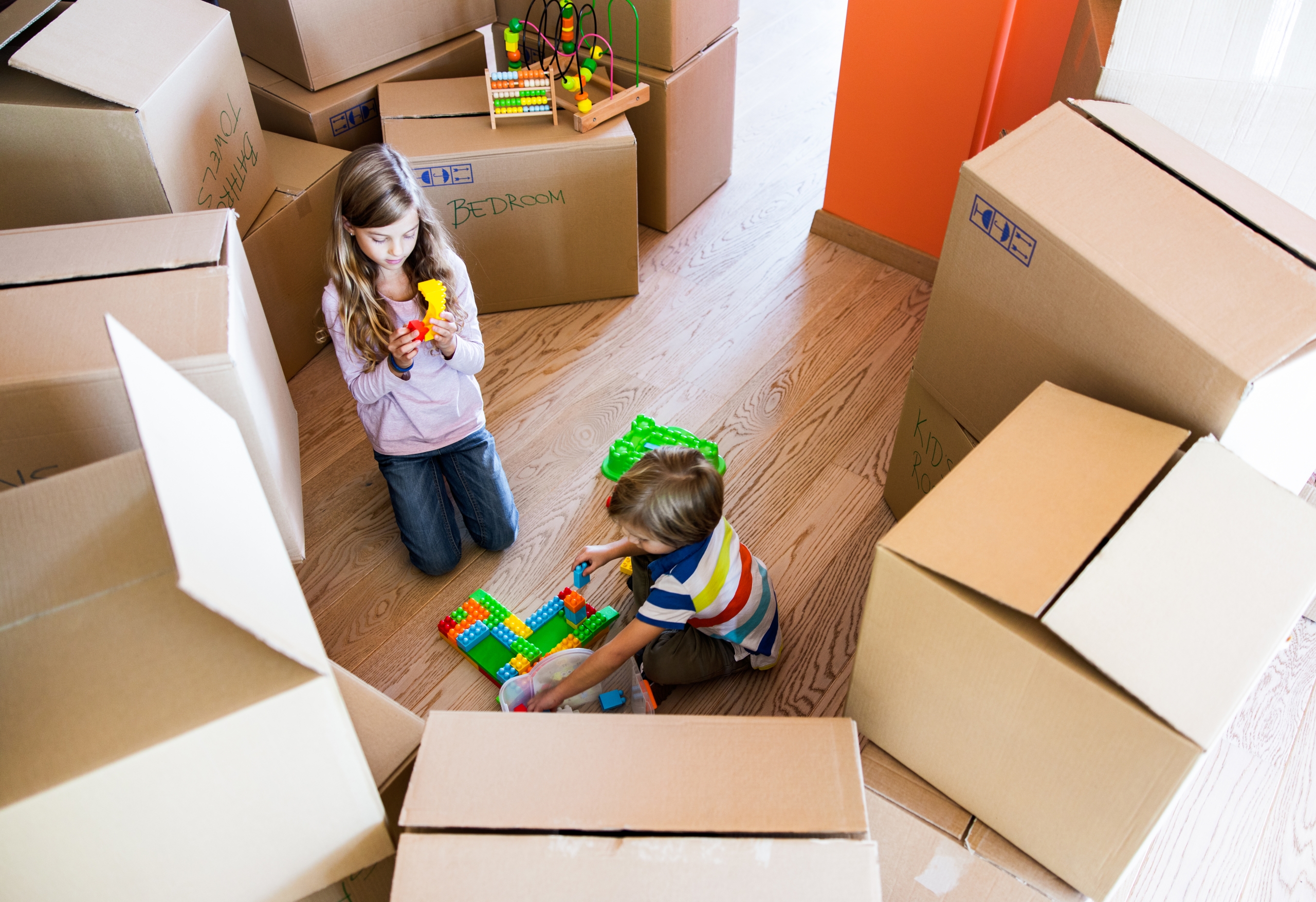 School-age kids like to feel useful, so give them a job. They can pack and label some of their belongings. Or they can plan the layout of their new room. Picture books or short videos about moving can also help younger kids talk through how they’re feeling.
Teenagers often have the most to lose — friendships, sports teams, and part-time jobs. Give them a real say where you can, like choosing their room or the paint color. If it’s an option, look up clubs or teams at the new school before you arrive so they can connect early.
Moving Day
Have a plan for the kids on the actual moving day. For older kids, the plan may be for them to unpack their own rooms. For younger kids, the plan may include setting up a play date or finding a babysitter.
When you arrive, you can give your kids a full tour of your new home to get them excited about moving in. Show them hidden doors or staircases and allow them to explore, as long as they are out of the way of the movers.
Keep safety in mind while the crew is working. Younger kids should stay with an adult and away from the truck. Older kids can help by watching younger siblings or keeping pets out of the way.
After the tour, if you have limited access to a babysitter or play date, create a familiar space in your young children’s new bedrooms. Make their beds, hang their curtains, and pull out their favorite toys, books, and blankets.
On a potentially stressful day for your family, having a plan to keep your kids occupied gives you room to focus on the move while your kids stay happy and safe.
Settling In
Once the actual move is complete, you and your family can start to settle into your new home.
If you have small children, take the time to childproof the home, including covering outlets, checking window locks, and anchoring dressers, bookshelves, and TVs to the wall. The Consumer Product Safety Commission’s Anchor It campaign explains how to secure furniture properly.
Allow your kids to help pick the paint color for their bedrooms. For older kids, you can even have them help paint.
Maintaining a consistent schedule, especially for younger children, will help them return to a sense of normalcy. Remind kids of their bedtimes and continue with fun activities even while you unpack.
Spending time outside is a good way to introduce your kids to their new surroundings. While you’re outside playing, you can meet new neighbors and potentially some of the new neighbors’ kids. This will help acclimate your family to your new neighborhood and your new neighbors to your family.
Give it time. Most kids take a few weeks, or even a few months, to feel at home, and some ups and downs are normal along the way. But if your child seems withdrawn, has trouble sleeping, or doesn’t want to go to school for more than a few weeks, talk to their teacher, a school counselor, or their pediatrician. Getting a little extra support early can make the adjustment much easier.
Key takeaways for a moving with kids:
- Prepare early: Use a family moving checklist and involve kids in the process.
- Communicate clearly: Be transparent and answer questions openly.
- Keep kids engaged: Allow kids to help with packing and setting up their rooms.
- Keep kids safe: Plan where they’ll be while the crew works and childproof the new home before they explore.
- Maintain familiar routines: Consistency helps reduce stress.
- Explore the new community: Make it fun and exciting to settle into the new home.
- Watch for signs of stress: Give kids time to adjust, and reach out to their school or pediatrician if they’re struggling.
There is no doubt that moving can be an exciting and emotional time. Moving with kids can make it that much more so. But with proper planning, your family can settle into their new home more easily.