


If you’re moving your office in winter, you need to approach it differently than you would in warm weather. Safety, equipment handling, and scheduling can all be affected by factors such as snow, ice, cold temperatures, and limited daylight hours. At the same time, you may find greater scheduling flexibility and operational advantages to a winter office move if you plan correctly.
A successful winter office move starts with risk reduction, asset protection, and realistic timelines that account for weather conditions.
Is it a good idea to move offices in winter?
Moving offices in winter can be a smart decision for many businesses. The commercial moving winter season is typically less congested, making it easier to secure preferred dates, loading docks, and building access. Because of this flexibility, you can simplify the coordination of your relocation.
Winter office relocations do require added preparation. Weather delays, snow removal, and cold-sensitive equipment must be factored into planning. When those risks are addressed early, wintertime office relocation can proceed smoothly without compromising safety or productivity.
Tip: Weigh the pros of winter scheduling against the cons of risky weather conditions to ensure you’re making a strategic choice rather than a last-minute compromise.
Building a winter office move timeline
Winter office move planning should start earlier than a standard relocation.
Because of the cold weather, you’ll need to consider additional logistics around your move like snow removal, floor protection, and climate control in both your old and new office spaces.
Begin by identifying fixed deadlines, including lease expirations and operational requirements. Build buffer time into the schedule to absorb weather disruptions without impacting business continuity. A flexible timeline is one of the most effective tools for reducing winter office downtime.
Tip: Add buffer days to your winter office move timeline to account for snowstorms or icy road conditions.
Managing winter moving risks and safety concerns
Snow and ice introduce safety challenges that don’t exist in other seasons.
Wet floors and icy loading areas increase the risk of slips and falls for employees and movers alike. To ensure the safety of everyone involved in your move, you must actively manage these risks on your move day.
Professional commercial movers use floor protection, controlled pathways, and moisture management to reduce hazards. Ensure that exterior walkways and loading docks are cleared of snow or ice and treated before the moving crews arrive. You should also confirm that interior heating systems are operational.
Tip: Confirm snow removal and floor protection responsibilities with both buildings before moving day.
Protecting equipment and IT infrastructure in cold weather
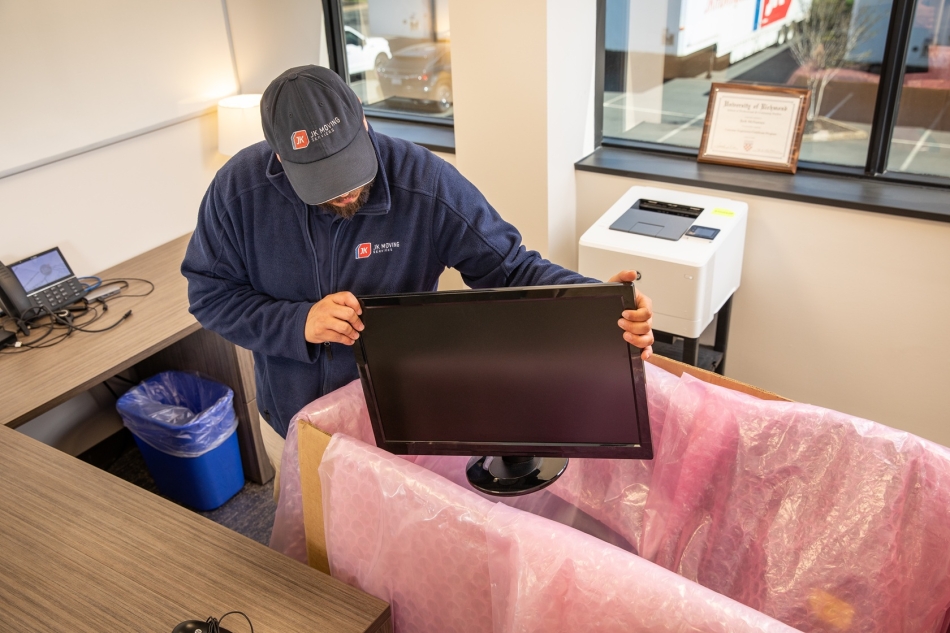 Cold temperatures and rapid environmental changes can cause condensation inside electronics, posing a potential damage risk to office equipment and IT systems during winter office moves.
Winter office packing tips should focus on insulation and moisture control. Equipment should be wrapped, sealed, and transported in climate-controlled vehicles when necessary. After delivery, devices should acclimate to indoor temperatures before being powered on, especially during server relocation.
Tip: Allow time for IT equipment to reach room temperature before reconnecting systems at the new location.
Keeping your office move on schedule during bad weather
Weather delays are a primary concern for businesses planning an office move during snow or ice conditions. Planning for every contingency will keep your relocation on track even if the weather forecasts change on your move day.
Professional movers monitor weather conditions and adjust routes, staffing, and loading sequences as needed. Internally, designating a single decision-maker helps streamline communication and avoid confusion if adjustments are required.
Tip: Designate an internal point of contact as a project coordinator if adjustments are needed on your move day.
Cost considerations for moving offices in winter
The cost of moving offices in winter can be competitive due to lower seasonal demand. Increased availability may enable better scheduling options than during peak months.
However, you must consider the possibility of extended timelines, specialized packing materials, or climate-controlled transport when planning, which may increase costs. Evaluating cost alongside risk management and downtime prevention provides a more accurate picture of overall value.
Tip: Compare the cost of relocating during the winter against the busy summer months, making sure to include pricing for any additional services.
Reducing downtime during a winter office relocation
Minimizing downtime during a winter office move depends on sequencing and preparation. Moving in phases allows critical teams to stay operational while the relocation progresses.
Ensuring heating, utilities, and network infrastructure are active before move-in is especially important in cold climates. A fully operational workspace supports employee safety and faster productivity.
Tip: Prioritize early setup of heating and IT systems to reduce post-move downtime.
Moving in winter with confidence
Working with an experienced, professional moving company can help facilitate your winter office relocation with detailed planning, asset protection, and logistics expertise designed to keep operations on track. Moving offices in winter doesn’t have to mean increased disruption. With careful planning, weather-specific safeguards, and experienced commercial movers, businesses can relocate successfully even in challenging conditions.