


Taking the time to right-size your office before relocating gives you the opportunity to reassess your space needs, eliminate unnecessary equipment and furniture, and design an office layout that meets hybrid and modern workplace expectations. Office right-sizing helps you lower moving costs and increase the efficiency of your move by reducing the number of items you need to transport to your new location.
Why should companies right-size before relocating?
Planning an office relocation is the perfect time to evaluate the operational effectiveness of your current workplace setup. This simple analysis can help you identify what no longer supports your operations and decide how to reduce your office footprint, improve workflows, and eliminate outdated equipment and furniture.
What is involved during office right-sizing?
During an office right-sizing exercise, you will align the space, furniture, and equipment with your actual business needs by reducing storage and removing items that no longer support employee productivity.
How does right-sizing help reduce commercial moving costs?
A smaller inventory means fewer trucks, less labor, and a shorter move timeline. Additionally, you will be less likely to need to temporarily store items during your relocation, which will help make move planning more predictable for your internal team and your commercial moving partner.
Tip: Start your office right-sizing evaluation several months before your relocation date.
How to determine what office space your company really needs
To help leaders design a workspace that reflects how your teams actually work, evaluate your current layout and space utilization. Taking the time before you relocate to assess your needs will help you avoid overestimating space needs and paying for unneeded square footage.
How can workspace utilization data guide right-sizing decisions?
Using workspace analytics, space utilization software tools, and simple occupancy studies, you can determine attendance patterns and see how often meeting rooms and workstations are being used. Insights like these help prevent overbuilding or planning unnecessary private office spaces.
Should hybrid and remote work models influence office space planning?
You should consider hybrid and remote work models when planning your new office space, as both affect how often employees are on site and how they interact with the space. You will need to plan for more shared collaboration areas and fewer assigned desks, which significantly reduce your office footprint.
Tip: Track peak, average, and low-attendance days over several weeks to determine your actual demand for seating and meeting rooms.
Which office items should be eliminated before a relocation?
Getting rid of unnecessary items before your move is an excellent way to reduce costs and create a streamlined, functional workspace.
What steps should a business take to right-size before moving?
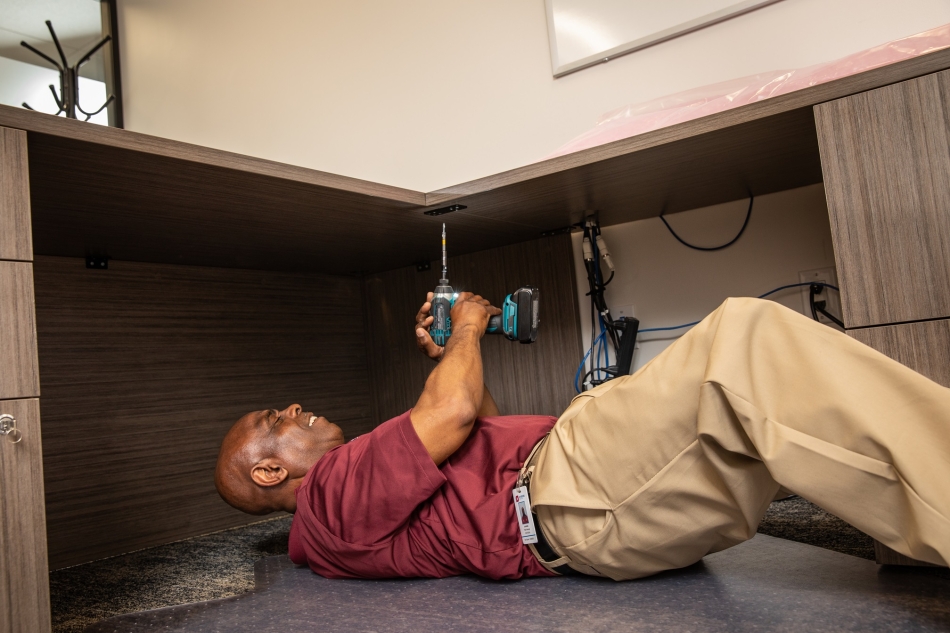 As a first step, carefully review your inventory to identify which items you want to move and what you can donate, recycle, or discard. Companies often discover unused file cabinets, old marketing materials, defective or nonworking technology, or excess furniture during this review prior to a relocation. Getting rid of these materials helps streamline the moving process and avoids clutter in your new office space.
Tip: Tag items consistently – move, donate, recycle, dispose – to keep organized while you work to reduce your inventory.
How to redesign the layout for a right-sized office
After you make decisions regarding your inventory, you can design your new workspace to align with your workflows and long-term goals.
How do I determine the ideal layout for my new office?
Space planning for your new office should reflect how your employees interact with each other every day. You don’t want to simply recreate the same layout from your old space. If you’re looking for professional assistance to assess and optimize your office space, work with a professional space planner, facility management team, or workplace strategy consultant to conduct a square footage analysis, occupancy planning, and workflow pattern mapping.
Tip: Share digital floor plans with your department leads early in the planning process to ensure the layout works for everyone.
Building a relocation timeline that supports right-sizing
A detailed timeline helps you coordinate your teams and avoid last-minute complications during the relocation process.
How early should I start the right-sizing process?
To allow enough time for assessments, inventory reduction, layout planning, and coordination with your relocation partner, it’s best to start three to six months before your move.
What should be included in an office relocation checklist?
Key steps include:
- Current-state assessment
- Space planning
- Inventory review
- Technology mapping
- Move sequencing
- Communication planning
A comprehensive checklist helps you stay organized, ensuring no tasks are overlooked and minimizing disruption to your operations.
Tip: Share your inventory lists and floor plans with your moving and logistics partner as early as possible to ensure accurate scheduling and resource planning.
How to support a successful right-sized relocation
Right-sizing enhances operational efficiency and reduces moving expenses, but it also requires careful planning and execution. Working with an experienced commercial relocation partner with expertise in office furniture consolidation, move management, and workplace transition planning will help you refine inventories, coordinate logistics, and safely move sensitive equipment and transition to a more efficient, modern workspace with confidence.