

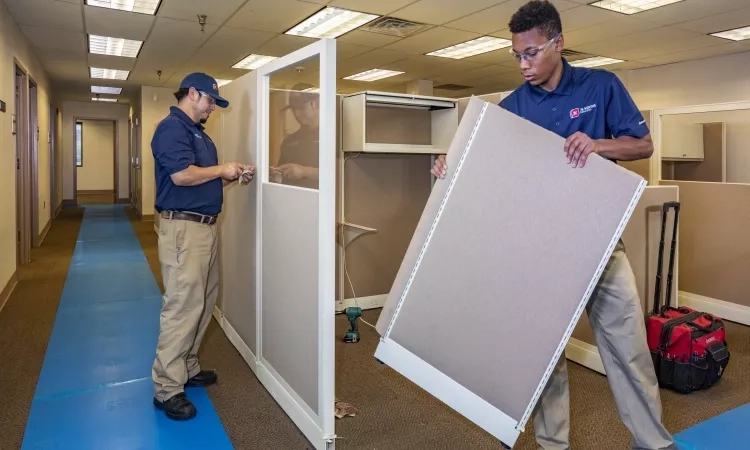
Yes, office cubicles can be recycled. A typical cubicle system is built from steel or aluminum framing, wood or laminate panels, fabric-covered foam, and sometimes glass or acrylic dividers. Every one of those materials has a recycling, resale, or donation path. You don’t need to send a truckload of workstations to the dump just because your office is moving, downsizing, or getting redesigned.
This matters more than it used to. Landfill fees for bulk furniture have climbed in a lot of metro areas, and more companies are being asked to report on waste diversion as part of their sustainability commitments. Disposing of cubicles the right way can save money and support that reporting at the same time.
Here are six ways to responsibly clear out old cubicles, roughly ordered from least effort to most coordination required.
The short version
- Ask the manufacturer. Some furniture makers run take-back or recycling programs for their own product lines.
- Sell through a liquidator. Cubicles in good condition can be resold or consigned instead of scrapped.
- Hire a decommissioning service. One vendor sorts, removes, and routes everything to reuse, donation, or recycling.
- Donate what still works. Nonprofits, schools, and Habitat for Humanity ReStore locations often take cubicles.
- Break them down by material. Steel, wood, fabric, and glass each go through separate recycling channels.
- Use a mover that handles disposal. Some commercial movers manage donation and recycling as part of the move itself.
What’s actually in a cubicle
Before picking a disposal method, it helps to know what you’re dealing with. Most cubicle systems combine five materials: metal framing, wood or particleboard panels, fabric upholstery, foam padding, and glass or plastic accents. None of these are hard to recycle on their own. The problem is that they’re bolted, stapled, and glued together, so full-unit recycling usually requires someone to break the unit apart first. That’s why curbside pickup and standard scrap recycling don’t work for whole cubicles, and why the options below exist.
1. Check with the manufacturer first
Before calling a hauler, contact whoever supplied your cubicles originally. A number of office furniture manufacturers offer buy-back programs, recycling services, or refurbishment options for their own products, and some will handle pickup directly. This step costs one phone call and can eliminate the rest of the list if your supplier says yes.
2. Sell through a furniture liquidation service
If your cubicles are still in decent shape, a liquidator can resell or consign them instead of scrapping them outright. This usually costs less than a straight removal-and-disposal job, and it keeps usable furniture in circulation. It’s worth calling a liquidator even if you assume your furniture is too worn. Condition standards vary by buyer, and a piece you wouldn’t put back in your own office might be exactly what a smaller company wants.
3. Hire an office furniture decommissioning service
When you’re closing out a lease, renovating, or relocating an entire floor, decommissioning is typically the most efficient route. A decommissioning service inventories everything in the space, then sorts it for reuse, donation, resale, or recycling before removal begins.
What’s included in decommissioning
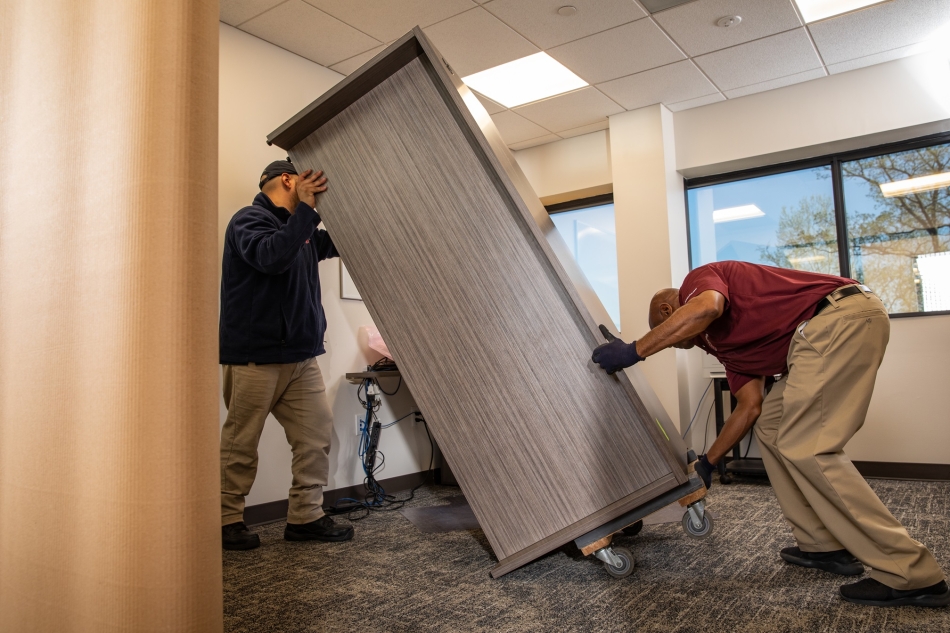
- Cataloging furniture, fixtures, and equipment before removal
- Coordinating resale or donation for anything still usable
- Recycling components that can’t be reused
- Removing everything from the space, often during nights or weekends to avoid disrupting operations
Decommissioning also addresses practical concerns: meeting lease-end obligations, minimizing business disruption during the transition, and documenting waste diversion if your company tracks sustainability metrics.
4. Donate to nonprofits, schools, or community organizations
A cubicle that no longer fits your office might be exactly what another organization needs. Common donation recipients include:
- Local nonprofits and community centers
- Schools and religious organizations
- Habitat for Humanity ReStore locations
Furniture donations to qualifying organizations can also be tax-deductible. Check with your accountant on the specifics, since the rules depend on the receiving organization’s status and how the donation is valued.
5. Break cubicles down and recycle by material
When a full unit can’t be reused or donated, recycle the parts individually:
- Metal frames: Most scrap metal yards accept steel and aluminum framing and may pay by weight.
- Wood panels: Look for a construction and demolition (C&D) recycler, or repurpose panels for shelving or storage builds.
- Fabric and foam: Harder to recycle curbside, but some textile recyclers and upholstery specialists accept it.
- Plastic and glass components: Rules vary by municipality, so check your local facility’s guidelines before hauling anything over.
Separating materials takes more labor up front, but it significantly increases how much actually gets recycled instead of landfilled.
6. Choose a commercial mover that handles sustainable disposal
If you’re already hiring movers for a relocation, ask whether they handle furniture disposal and donation as part of the job. At JK Moving Services, our commercial moving teams offer:
- Office decommissioning and asset management
- Donation coordination and recycling logistics
- Responsible e-waste and furniture disposal
- Move planning designed to reduce waste at every step
Folding disposal into your move plan means one point of contact instead of three or four separate vendors.
Why this is worth the extra effort
Recycling and donating old cubicles instead of landfilling them cuts disposal costs, since many haulers charge by volume or weight for bulk furniture. It also extends the useful life of materials that took real resources to manufacture, and it gives you something concrete to point to if leadership, clients, or employees ask what your company actually does about sustainability, beyond a policy page.
Frequently asked questions
Can office cubicles actually be recycled?
Yes. The metal, wood, fabric, and glass in a typical cubicle system can each be recycled through the appropriate channel, though the whole unit usually needs to be broken down first.
What’s the cheapest way to get rid of old cubicles?
Donation is often the lowest-cost option if the cubicles still work, since many nonprofits arrange their own pickup. For larger quantities, a decommissioning service usually costs less overall than paying separately for removal, disposal fees, and hauling.
Can I get a tax deduction for donating office furniture?
Often, yes, if you donate to a qualifying nonprofit and follow IRS documentation requirements. Talk to your accountant before finalizing the donation so it’s valued and documented correctly.
What is office furniture decommissioning?
It’s the organized removal of furniture, fixtures, and equipment from a commercial space, with everything sorted for reuse, donation, resale, or recycling instead of going straight to a landfill.
Planning a larger transition? Our guide to planning an eco-friendly move covers more ways to cut waste throughout the process.