


Amsterdam has a way of winning you over before you’ve even arrived. With its canals and cycling culture and café on every corner, it’s a city that feels livable in a way that’s hard to explain until you’ve spent time there. It’s no surprise that it consistently ranks among the top destinations in Europe for American expats. World-class infrastructure, a strong international business community, and a culture that actually takes work-life balance seriously make it easy to see why so many Americans are trading in their zip codes for a Dutch postcode. That said, moving to Amsterdam from the US is a real undertaking, more involved than most people expect. Getting immigration right, understanding what things actually cost, and knowing what to sort out before you land can make the difference between a smooth transition and a stressful one.
Whether you’re relocating for a career opportunity, starting a business, or simply chasing a new chapter, this guide covers what Americans need to know before making the move.
What visa do Americans need to live in Amsterdam?
As a US citizen, you can enter the Netherlands without a visa and stay for up to 90 days, but if Amsterdam is where you’re planning to actually live and work, you’ll need a residence permit. The right one depends on your situation, so it’s worth understanding your options before you start packing.
For Americans moving to Amsterdam independently, the Dutch-American Friendship Treaty (DAFT) visa is often the first place to look. It’s specifically designed for US citizens who want to establish themselves as self-employed entrepreneurs in the Netherlands, and the barrier to entry is relatively low: A minimum investment of €4,500, no Dutch-language requirement, and a two-year renewable permit. Freelancers, consultants, and remote workers have leaned heavily on this pathway, and for good reason. It’s one of the more straightforward routes to legal residency available to Americans.
If you’re relocating for a job with a company, the process looks different. Most employers will handle sponsorship for a highly skilled migrant permit (known as the kennismigrant) through the Immigration and Naturalisation Service (IND), which takes a lot of the complexity off your plate. There are also a few other routes, including an Orientation Year visa for recent graduates looking to explore opportunities in the Netherlands and family reunification permits for spouses and children joining a permit holder already living there.
Tip: Start your visa research at least six months before your planned move date, as some permit applications take several months to process.
How much does it cost to move to Amsterdam from the USA?
Amsterdam is the most expensive city in the Netherlands, so budgeting carefully before you arrive is essential. Numbeo reports that a single person can expect to spend roughly €1,135 per month on living expenses, excluding rent. Add housing to the equation and that number jumps significantly.
Rent will likely be your biggest monthly expense, and Amsterdam’s housing market is competitive. A one-bedroom in the city center typically runs somewhere between €1,500 and €2,500 per month, and a three-bedroom can push well past €4,000. If that feels like a stretch, it’s worth noting that neighborhoods just outside the center, Amsterdam Noord and Oost in particular, can come in 20 to 30 percent cheaper without putting you far from public transit. For a lot of expats, that trade-off is an easy one to make.
Health insurance is the other fixed cost to plan for, and it’s not optional – coverage is mandatory for all Dutch residents. In 2026, basic coverage (basisverzekering) runs about €159 per month, with an annual deductible (eigen risico) of €385. The Dutch healthcare system is genuinely good (and significantly more affordable than what most Americans are used to) so this is one area where the sticker shock tends to go in a pleasant direction. Just make sure you get coverage sorted quickly after registering with your local municipality, as there are deadlines involved.
If you’re still in the early stages of preparing for an international move, building your budget around these fixed costs first gives you a much clearer picture of what you’re actually working with before you layer in the variables.
Tip: Ask about the 30% ruling when negotiating a job offer, as it allows qualifying expats to receive 30% of their salary tax-free for up to five years.
What are the best neighborhoods in Amsterdam for expats?
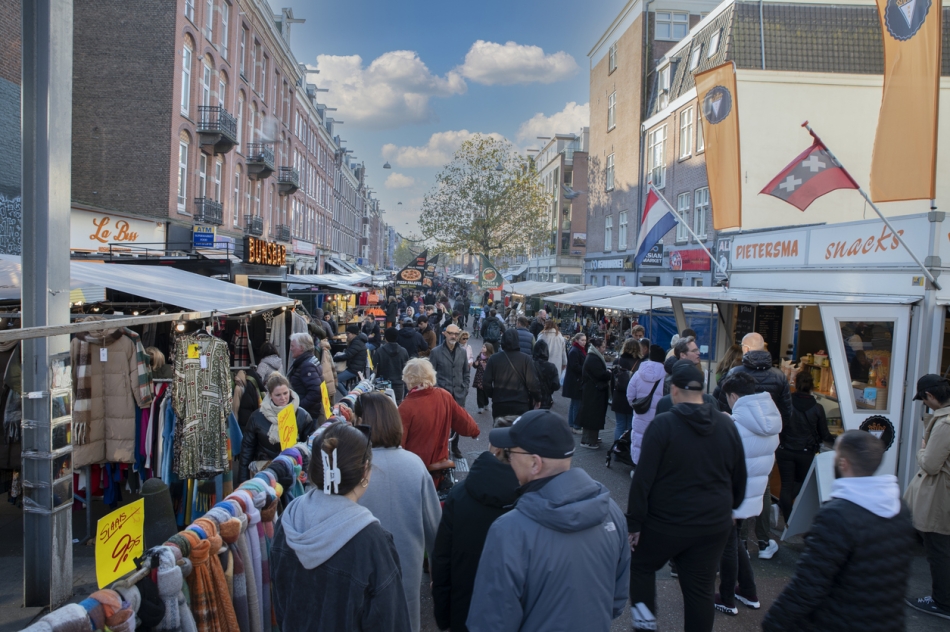 One of the things that makes Amsterdam so livable is that it’s really a collection of distinct neighborhoods, each with its own rhythm. Finding the right one is less about picking the “best” area and more about figuring out which one matches how you actually want to live.
De Pijp tends to be the first stop for expats, and it earns that reputation. It’s central, diverse, and full of energy; anchored by the iconic Albert Cuypmarkt; and well-connected to both the Zuidas business district and Schiphol Airport via direct metro. For young professionals especially, it hits a lot of the right notes.
Jordaan is for people who fell in love with the postcard version of Amsterdam – narrow streets, canal-side walks, independent galleries, boutiques, and the kind of café you want to spend a Sunday morning in. It’s undeniably charming, and the rent reflects that. If character is high on your list and budget is flexible, it’s hard to beat. If you’re watching costs closely, it might be one to admire from a distance.
Families often gravitate toward Amsterdam Zuid (South), which borders Vondelpark and sits close to the city’s top international schools. The Rivierenbuurt and Apollobuurt sections offer spacious apartments and quiet, tree-lined streets. For a more budget-friendly option with an up-and-coming energy, Amsterdam Oost features the Indische Buurt, a multicultural neighborhood with great food and waterfront views.
Whichever neighborhood ends up feeling like home, start looking for housing early – good apartments in Amsterdam get snapped up quickly. Landlords typically require proof that your gross monthly income is at least three times the rent. The more prepared you look on paper, the better your chances. Reviewing your international moving checklist well in advance will help you stay more organized.
Tip: Join local expat housing groups and register with Dutch rental platforms like Funda and Pararius as early as possible to get ahead of the competition.
What should you know about working in Amsterdam as an American?
Amsterdam offers strong career opportunities. Tech, finance, logistics, and the creative industries all have a strong presence, and the city serves as the European headquarters for a long list of multinationals. English is the working language in most professional environments, so the language barrier is lower than you might expect. That said, picking up some basic Dutch goes a long way, not just for your career prospects over time, but for the everyday moments that make you feel like you actually live somewhere rather than just visiting.
Once you’ve arrived, your first administrative priority is registering with your local municipality (gemeente) to get your BSN (Citizen Service Number). Think of it as the Dutch equivalent of a Social Security number, and you’ll need it for employment, banking, healthcare, and taxes, so nothing else really moves forward until that’s sorted. While you’re at it, open a Dutch bank account and apply for a DigiD, which is how you access most government services online. It sounds like a lot of paperwork upfront, but it’s a fairly straightforward process once you’re in it.
Taxes are where things get a bit more complicated for Americans specifically. The Dutch tax system has its own learning curve, but the bigger wrinkle is that US citizens are required to keep filing US taxes no matter where in the world they live. Getting familiar with the Foreign Earned Income Exclusion, the Foreign Tax Credit, and FBAR reporting requirements before you move (ideally with the help of an expat tax professional) will save you a lot of stress down the road.
How to ship your belongings to Amsterdam
Moving to Amsterdam involves detailed logistics. Ocean freight from the US to the Netherlands typically takes four to six weeks, which means your shipment needs to leave well before you do or you’ll be living out of a suitcase longer than you’d planned. Customs clearance adds another layer to coordinate, and choosing the right shipping container size from the start can save you from paying for space you don’t need.
Before you start packing, take a hard look at what’s actually worth bringing. A lot of Americans find that selling larger furniture pieces before the move and buying new ones in Europe makes more financial sense than shipping them. Dutch homes tend to run smaller than what most Americans are used to, and bulky pieces often don’t translate well anyway. The same logic applies to your car. Amsterdam’s cycling infrastructure and public transit are exceptional, and plenty of expats find they don’t need a car at all. If you’re still weighing it, our guide to shipping your car overseas is a good place to think it through.
If you’re bringing pets with you to Amsterdam, the Netherlands has specific entry requirements. A microchip, a current rabies vaccination, and an EU health certificate are all non-negotiable. It’s more manageable than it sounds, but the timeline matters, so don’t leave it until the last minute. Our international pet relocation guide will help you coordinate everything.
Tip: Book your international mover at least eight to twelve weeks in advance to secure your preferred shipping and delivery dates.
How to adjust to expat life in Amsterdam
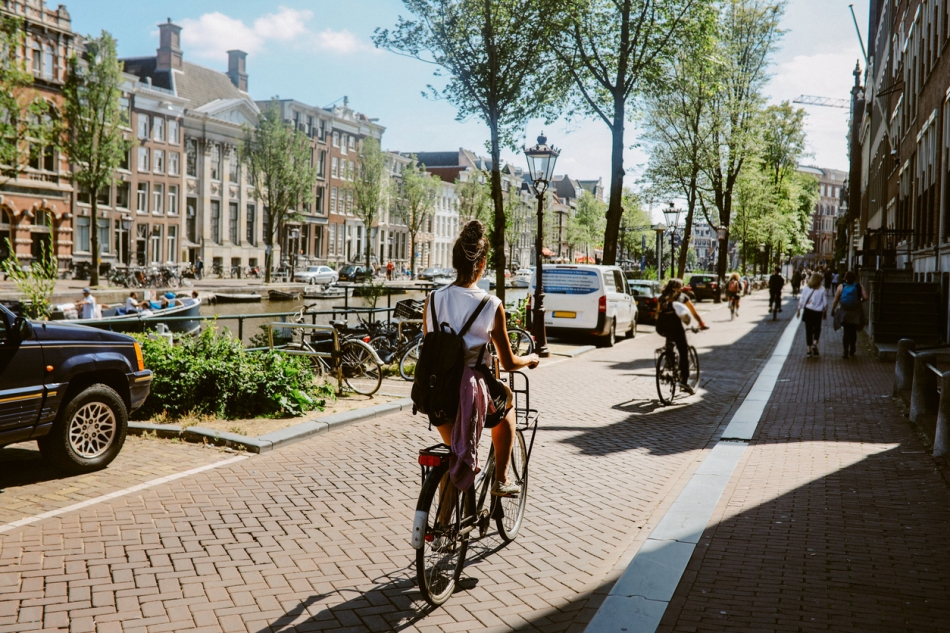 Culture shock is normal, even in a city as welcoming as Amsterdam. The Dutch value directness, punctuality, and a strong separation between work and personal time. Cycling is the dominant mode of transportation, and adapting to life abroad means embracing the bike lanes and learning the unwritten rules of the road.
One significant advantage of moving to Amsterdam is that you’re far from the only person who has done it. The city has one of the largest international communities in Europe, which means the experience of arriving somewhere new and not knowing anyone is one that a lot of your future neighbors will recognize immediately. Expat groups, language exchange meetups, and neighborhood events are all excellent ways to find your people – and in Amsterdam, there’s no shortage of them. The connections you make in those early weeks have a way of turning into the ones that stick.
Tip: Invest in a quality rain jacket and a sturdy bike lock with two separate locks, as bike theft is common, and Dutch weather is famously unpredictable.
Make your Amsterdam relocation seamless
Moving to Amsterdam from the US is an exciting step, and having the right partner makes all the difference. Look for a moving company with international moving experience and FIDI/FAIM certification to manage every detail of your overseas relocation, from expert packing and customs guidance to delivery at your new front door.