


Moving is stressful enough without arriving at your new home to find scratched floors, a cracked glass tabletop, or a sofa coated in truck dust. Knowing how to prepare furniture for moving – from disassembly to wrapping to loading – protects your belongings and saves you from costly surprises.
Step 1: Declutter and inventory before you pack
Before wrapping a single piece of furniture, take stock of what you actually want to move. Moving is an ideal moment to donate, sell, or discard items that no longer serve you.
Create a moving inventory checklist that notes each item, its condition, and any special handling needs. This also comes in handy if you need to file a moving insurance claim.
Tip: Photograph your furniture before the move to document pre-existing conditions. This is particularly helpful if items are damaged during transport.
Step 2: Disassemble what you can
Disassembling furniture makes it lighter, easier to maneuver through doorways, and less likely to sustain damage.
Bed frames
Remove the headboard, footboard, and side rails to protect joints from stress and make navigating tight spaces easier.
Dining tables
Remove legs if they detach and wrap the tabletop separately. For glass tables, wrap in moving blankets and transport vertically whenever possible.
Dressers and chests
Remove drawers to reduce weight – you can often pack clothing inside them. Remove and wrap any attached mirrors separately.
Tip: Place screws and hardware in a labeled zip-lock bag and tape it to the furniture piece, over a layer of wrap, never directly on the surface. Learn more about smart labeling strategies that keep reassembly stress-free.
Step 3: Choose the right protection materials
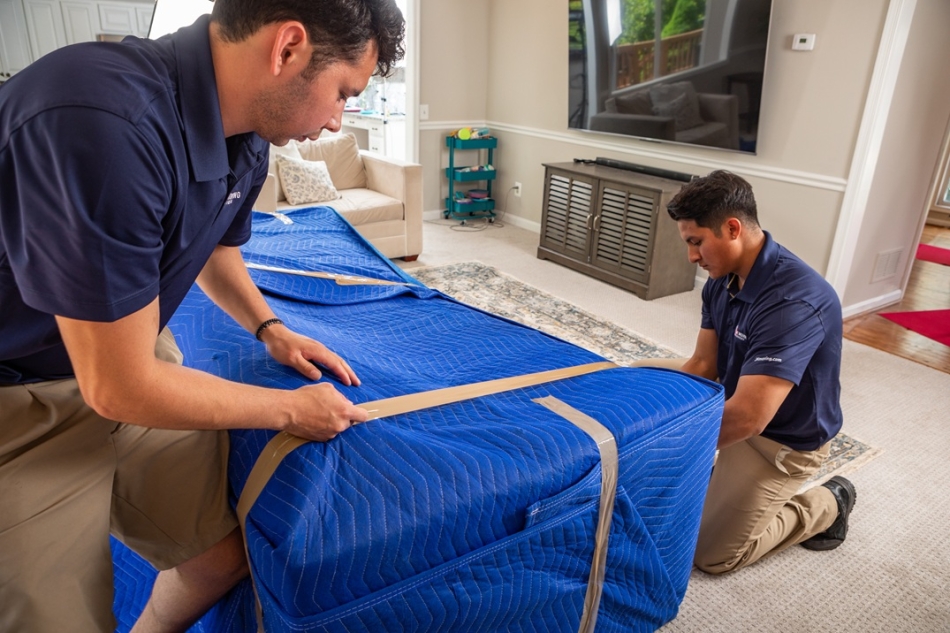 Moving blankets: The gold standard for wood furniture, upholstered pieces, and anything with a finished surface.
- Shrink wrap: Ideal for bundling blankets in place and protecting sofas and chairs from moisture. Never apply directly to wood or leather.
- Bubble wrap: Best for corners, legs, and glass elements.
- Mattress bags: Essential protection against dirt, moisture, and tears.
- Cardboard corner guards: Low-cost protection for sharp edges on wood furniture.
Tip: Use moving blankets and shrink wrap together. Blankets absorb impact; shrink wrap keeps them in place.
Step 4: What NOT to tape when moving furniture
Never tape directly to wood, leather, upholstery, or any painted or finished surface. Adhesive can permanently damage finishes, pull fabric fibers, and leave sticky residue on leather. Always tape over a layer of moving blanket or plastic wrap. The same applies to glass.
Step 5: Wrap and secure each piece
- Clean surfaces lightly before wrapping; dirt and grit can scratch finishes under pressure.
- Apply corner protectors or bubble wrap to exposed edges and legs.
- Wrap fully in a moving blanket, overlapping generously.
- Secure with stretch wrap or moving straps; never tape against the furniture surface.
- For sofas and upholstered pieces, add a final layer of shrink wrap to seal against moisture.
- Label each wrapped piece with the destination room and fragile handling notes.
Tip: Antique and high-value furniture warrants extra care. Review JK Moving’s guide to safely moving valuable items for advice on custom crating and valuation coverage.
Step 6: Load smart
- Load the heaviest items first, against the cab wall, for better weight distribution.
- Stand mattresses and large flat pieces vertically whenever possible.
- Use moving straps to secure furniture to the truck walls.
- Place moving blankets between any stacked or adjacent pieces.
- Use furniture sliders under legs—never drag directly on hardwood or tile.
- Use door frame protectors and floor runners during the move.
Start early, move smart
Begin disassembly and wrapping two to three days in advance – earlier for larger homes. A systematic approach is the best defense against damage. If the process feels overwhelming, a professional moving crew brings the experience and equipment to handle it all.