


Functional and productive workspaces require the right office furniture installation plan. A great furniture arrangement enhances workflow and improves employee comfort while supporting collaboration. Planning an office setup can be challenging, and businesses may struggle to optimize their layout and choose furniture systems that meet their needs. Add the logistics of delivery and assembly, and it becomes even harder.
Look for a moving partner with an experienced furniture installation team furniture installation team trained to handle diverse furniture systems like modular workstations and ergonomic setups. When your team enters their new workspace, you want every piece securely installed and ready for use, with damage-free assembly that saves you time and helps you avoid repair costs.
A knowledge of ergonomics and workflow optimization helps create office layouts that suit any organization’s needs and enhance productivity and comfort.
Planning an office furniture installation
A smooth office furniture installation requires thorough preparation. Start by creating a detailed checklist that includes:
- An inventory of all furniture items.
- Floor plans with designated areas for each piece.
- Timelines to ensure tasks stay on schedule.
Conduct site assessments to identify potential challenges such as access points (elevators or staircases) that could limit movement of large furniture, space constraints, or special installation requirements. Then coordinate with your installation team to align schedules and avoid disruptions to regular business operations.
Build the schedule around lead times
New office furniture rarely ships right away. Depending on the manufacturer and how much is custom, orders can take weeks or even months to arrive. Work backward from your move-in date, and leave some room in case a shipment runs late. If part of an order is delayed, ask your installation team whether they can set up the pieces that did arrive first, so most employees have a place to work on day one.
Plan where deliveries will go
If your furniture arrives before the new space is ready, you need to determine ahead of time who will receive each shipment and where it will wait until it’s ready to be installed. A moving partner with warehousing can receive, inspect, and store deliveries, then bring everything to the site on the install date. That keeps boxes out of a space where contractors may still be working, and it gives you a chance to catch damage or missing items early.
Check the building’s rules
Find out what your building’s requirements are before your installation day. To coordinate with your moving partner, you’ll need to know if you have to schedule work after hours. And, a missing insurance certificate or an unreserved elevator or freight dock can delay an entire install.
Coordinate power and data
Workstations need power and network connections, and the furniture often determines where those go. Your IT team and electrician must work together before installation starts to plan where outlets and cabling will be in relation to your furniture. For larger moves, schedule the installation and the office IT relocation together so employees can log in as soon as their desks are ready.
Finish with a walkthrough
Before the installers leave, do a walkthrough with the project lead to make sure every piece is installed according to the floor plan and works properly. For anything that is damaged or missing, create a punch list and timeline to fix it.
Space optimization
You want your office layout to support employee productivity and comfort. With strategic space planning, you can include collaborative spaces for your team, along with private and flexible workspaces.
Eco-friendly materials and maximizing natural light help you create an efficient furniture layout that promotes environmental responsibility.
FAQs
 1. How do professional office furniture installation services ensure the safety and durability of assembled furniture?
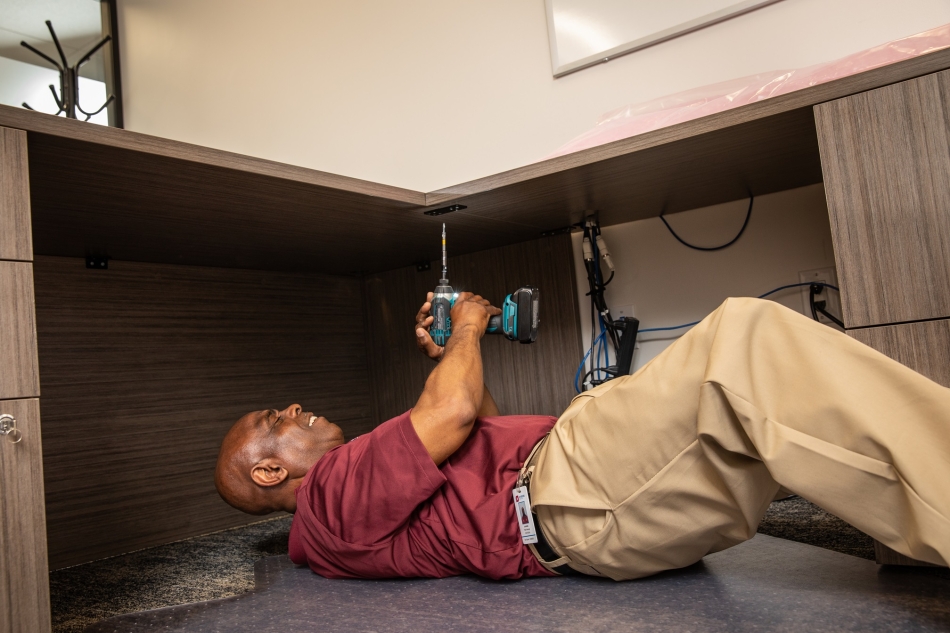
Experienced installers follow manufacturer’s instructions and use the right hardware and tools for every piece. That matters for more than safety, since some furniture warranties depend on proper assembly. Before they leave, they’ll make sure desks sit level, shelves and overhead storage are firmly attached, and sit-stand desks raise and lower without wobbling. If something isn’t right, they fix it on the spot.
2. What steps are taken to align furniture placement with the ergonomic needs of employees?
Your moving partner will work with you to evaluate your workspace needs and adjust furniture to meet your employees’ ergonomic needs. This includes optimizing desk and chair placements, using adjustable desks, and creating layouts that promote good posture and reduce physical strain.
3. Can installation teams work with our specific layout and design?
The installation team works from the floor plan you provide, so it’s best to have that finalized, along with any notes from your designer or furniture dealer, before install day. The crew will place each piece where it’s designated on your plan, regardless of whether you’re setting up open collaboration areas, private offices, or a mix of both. Modular systems and custom pieces may need extra time or specialized installers, so mention them early so they’re built into the schedule.
4. What are the benefits of choosing a service that includes furniture delivery and packaging management?
An all-inclusive service provides coordination from delivery to setup. It ensures timely delivery and eliminates clutter. Responsible packaging waste management lets you focus on other priorities during your office setup.
Planning makes the difference
Most installation problems trace back to something that could have been settled earlier: a shipment that arrived late, an elevator nobody reserved, or outlets in the wrong place. When the schedule, deliveries, building rules, and IT are planned together, install day goes much more smoothly, and employees can sit down and get to work in a space that’s ready for them.
An experienced office furniture installation team can manage those details for you, from receiving deliveries to the final walkthrough. That leaves your team free to focus on the rest of the move.