


A painting you’ve spent years collecting. A sculpture that anchors your living room. A framed piece handed down through generations. When it’s time to move, these aren’t just decorative items – they’re irreplaceable.
That’s where fine art movers come in. Whether you’re relocating locally or across the country, understanding how professional art transportation works will help you protect what matters most. The demand for these specialists is growing – the US fine art and antiques moving market is valued at around $1.7 billion in 2026 and is forecast to reach $2.8 billion by 2033, reflecting a 7.5% annual growth rate driven by expanding collector bases, rising auction activity, and growing institutional art loans.
What do fine art movers do?
Fine art movers are specialists trained to handle paintings, sculptures, antiques, and other high-value collectibles. They don’t treat artwork like furniture. Every piece gets its own customized plan, from initial assessment through installation at the destination.
Services typically include custom crating, climate-controlled transport, detailed condition reporting, white-glove handling, and secure storage. These professionals understand that a single misstep – whether it’s a sudden shift in temperature or an improperly loaded crate – can cause irreversible damage to something irreplaceable.
If you’ve got other high-value belongings alongside your art collection, our guide to safely moving valuable items is a smart read before your move.
How is artwork packed for safe transportation?
Museum-quality packing is non-negotiable when it comes to fine art. Professional art handlers use acid-free tissue paper and glassine to protect painted surfaces, corner guards to shield frames, foam padding to absorb vibration, and custom-built wooden crates fitted precisely to each piece’s dimensions.

Standard bubble wrap, while fine for household items, can actually damage oil paint varnish. Newspaper ink transfers onto marble. Packing tape pulls off gilding. What works in a regular move has no place near a valuable piece of art. Our fragile item packing guide covers foundational techniques that apply to any sensitive item in your home.
Sculptures and mixed-media works get shock-absorbing materials tailored to their shape. Framed pieces with glass get reinforced corner protection. Large canvases are often soft-packed for short local moves and hard-crated for longer hauls.
Tip: Photograph every piece from multiple angles before your movers arrive. These images become your condition report baseline and are essential for any insurance claim.
Do fine art movers offer valuation coverage?
Yes, and the difference from standard coverage is significant. Most general movers offer basic liability at around $0.60 per pound – a standard that’s wholly inadequate for a painting worth tens of thousands of dollars. Fine art movers arrange coverage based on the appraised or agreed-upon value of each piece, which means you’re better protected if something goes wrong.
Reputable fine art movers also conduct formal condition reports before and after transport, documenting the state of each piece with photographs and written assessments. This chain-of-custody documentation isn’t just good practice. It’s what makes an insurance claim possible.
Do fine art movers provide climate-controlled transport?
They do, and it’s one of the most important things that separates art movers from general movers. Artwork is sensitive to fluctuations in temperature and humidity. Canvas warps, paint can crack, and wood expands and contracts. Even a short trip in a non-air-conditioned truck can cause damage that takes years to surface.
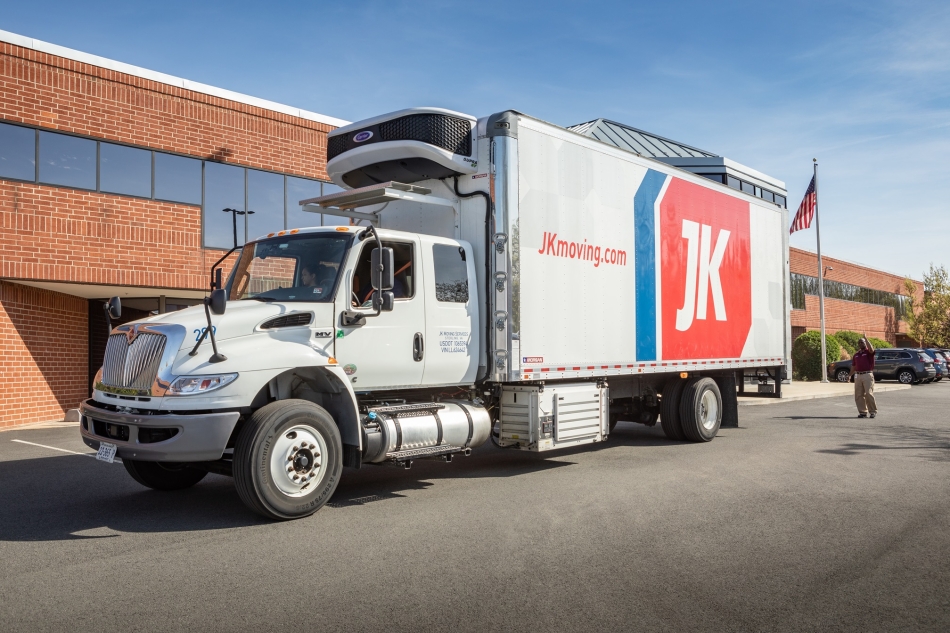 Fine art transport vehicles maintain stable temperature and humidity throughout the journey. Most are also equipped with air-ride suspension systems that minimize vibration on the road. UV-protective coverings shield pieces from direct light exposure during loading and unloading. For context on what “climate-controlled” actually means in practice: leading conservation bodies recommend maintaining relative humidity between 45 to 55% with no more than a 5% swing, and temperatures in the 59 to 77°F range. The most rigorous providers now log temperature, humidity, shock, and vibration data throughout each journey, giving collectors and institutions documented proof of stable conditions.
For pieces headed across the country, it’s worth asking about exclusive-use vehicles – trucks reserved solely for your collection rather than shared with other shipments. Our long-distance moving resources can help you think through the logistics of a larger cross-country relocation.
Tip: Allow artwork to acclimate gradually after arrival before uncrating. Opening crates too quickly in a new environment can cause condensation and thermal stress on sensitive materials.
Do fine art movers offer secure storage?
Many do, and it’s a service worth understanding even if you only need it briefly. Artwork often needs temporary holding during a home renovation, estate transition, sale preparation, or exhibition scheduling. Art-specific storage is different from a standard self-storage unit – it offers climate-controlled vaults, 24/7 security, and electronic inventory tracking so you always know where your pieces are and what condition they’re in.
Storage also becomes especially relevant during estate transitions. Research from Chubb finds that a large majority of art collectors plan to pass their pieces to heirs, yet many have concerns about managing that handoff smoothly. A fine art mover that also offers managed storage and inventory documentation can be a valuable partner in that process – not just for the move itself, but for the broader logistics of collection management over time.
What role does technology play in fine art moving?
A growing one. The best fine art movers now offer digital inventory systems and real-time shipment tracking alongside their physical handling services. This means you can follow your piece from pickup to delivery, access condition reports and photographs at any stage, and maintain a documented ownership record, which matters for insurance, appraisal, and eventual resale.
This digital layer is becoming an expected feature rather than a premium add-on, particularly for collectors, galleries, and estate managers with works spread across multiple locations. When evaluating a mover, ask how they handle condition documentation and whether they provide a client-accessible tracking portal or digital inventory record.
What should you look for in a fine art moving company?
Licensing is the baseline. Look for USDOT registration and verify the company has documented experience with fine art specifically, not just high-value household goods. Ask for references from collectors, galleries, or estates they’ve worked with. Review their packing materials and processes. And confirm that their insurance options reflect the actual value of what you’re moving, not just the weight.
Choosing the right fine art moving company comes down to experience, process, and accountability. Look for a mover with documented fine art expertise, proper licensing, museum-quality packing materials, and valuation coverage that reflects what your pieces are actually worth – not just what they weigh. The right partner will treat your collection with the same care you do, from the first wrap to the final hang.