

Closing or relocating a laboratory is rarely a straightforward process. Unlike a standard office decommissioning, lab closures involve layers of environmental regulation, hazardous material handling, and compliance documentation that can trip up even experienced facilities teams. Getting it wrong isn’t just costly, it can expose your organization to significant legal and regulatory liability.
Here’s what organizations need to understand before they begin.
Start with a thorough inventory and risk assessment
Before anything moves or gets discarded, you need a complete picture of what you’re working with. A formal risk assessment should account for every category of hazardous material present in the space: chemical, biological, radioactive, and mixed waste. This inventory drives every downstream decision, including disposal method, vendor selection, timeline, and documentation requirements.
Tip: Engage your Environmental Health and Safety (EHS) team at the very start of planning, not after decommissioning is already underway. Many compliance issues stem from EHS being brought in too late to catch problems before they become violations.
Understand which regulations apply – and they vary
 Decommissioning a lab sits at the intersection of multiple regulatory frameworks. The EPA governs hazardous waste disposal under the Resource Conservation and Recovery Act (RCRA). OSHA sets standards for worker safety during decontamination and material removal. State environmental agencies layer additional requirements on top of federal rules, and those can vary significantly depending on where your facility is located.
For labs handling radioactive materials, the Nuclear Regulatory Commission (NRC) has its own decommissioning requirements, including formal license termination procedures. Biological materials may require coordination with the CDC or institutional biosafety committees, depending on the risk classification.
Tip: Don’t assume that what applied at your last facility applies here. Regulations vary by state, material type, and facility classification. Verify requirements with your EHS team and legal counsel before finalizing your decommissioning plan.
Decontamination is non-negotiable before anything leaves the lab space
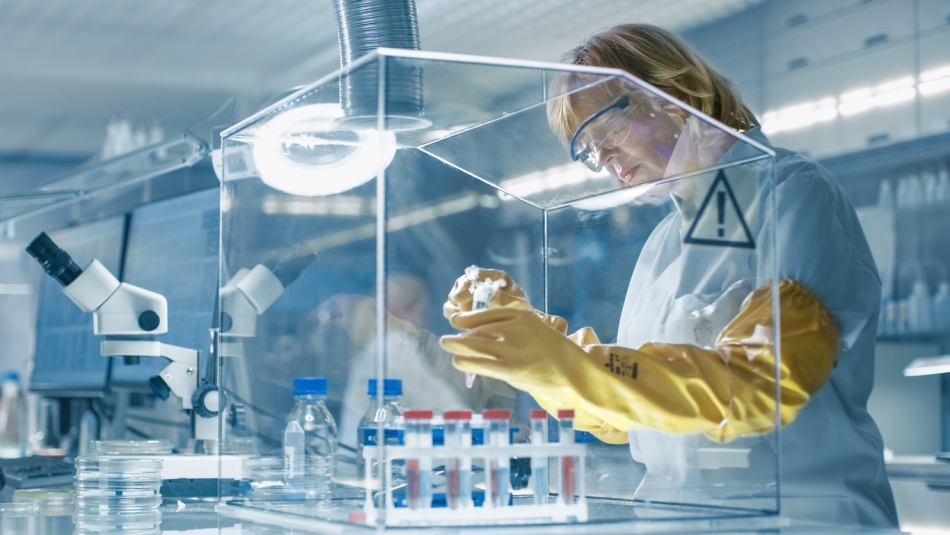
Surfaces, equipment, fume hoods, biosafety cabinets, and piping all require decontamination before removal or disposal. The method – chemical neutralization, UV treatment, autoclaving, or others – depends on the contaminant. Equipment that hasn’t been properly decontaminated cannot be legally transported off-site, and attempting to do so creates serious liability exposure.
All decontamination work should be documented with verification records, including who performed the work, what methods were used, and the results of any surface or air testing conducted.
Asset disposition requires a deliberate strategy
Not everything in a lab gets thrown away. Decommissioning is also an opportunity to recover value from equipment that still has useful life – through relocation to another facility, resale, or donation to academic or nonprofit organizations. Items that can’t be reused need to go through appropriate disposal channels, which for regulated materials means licensed hazardous waste vendors with documented chain of custody.
Tip: Keep disposal manifests and certificates of destruction for all regulated waste. These documents may be required during future compliance audits or property transactions.
Documentation closes the loop
Regulatory agencies and future tenants will want evidence that your space was properly decommissioned. That means maintaining records of your chemical inventory, waste disposal, decontamination procedures, inspection sign-offs, and any remediation work performed. A formal closure report (reviewed and approved by your EHS team) protects your organization and satisfies landlord or regulatory requirements for space release.
Laboratory decommissioning is a specialized process that benefits from experienced project coordination. Look for a professional moving and logistics partner with laboratory moving and decommissioning services designed for exactly this kind of complexity – from hazardous material coordination and equipment removal to full project management through final inspection.