


There’s a version of this conversation that’s full of buzzwords and bold predictions about autonomous trucks and robot warehouses. That version isn’t very useful. The more interesting story is what’s already happening – the quieter, less dramatic shift in how artificial intelligence in logistics is changing what commercial fleets can see, respond to, and prevent, and why it matters for the companies that depend on them.
AI and fleet technology aren’t replacing the people in this industry. They’re changing what those people can do, and that shift has real consequences for safety, efficiency, and the organizations that rely on commercial logistics to move their businesses forward.
From visibility to intelligence
For years, fleet technology was mostly about visibility: GPS tracking, basic telematics, knowing where your trucks were. That was useful. But as Motive noted in its 2025 fleet management analysis, visibility alone has become table stakes. The challenge now is making sense of the data and acting on it before problems develop.
That’s where AI changes the equation. Rather than giving fleet managers more dashboards to monitor, modern AI-powered logistics platforms process thousands of data points in real time and surface what actually needs attention. A drop in tire pressure. A pattern of hard braking on a specific route. A driver whose behavior has shifted in ways that suggest fatigue. These signals existed before; they just got lost in the noise.
According to S&P Global’s 2025 commercial transportation research, nearly 56% of commercial transportation vendors already deploy AI and fleet technology systems, with another 40% planning to implement them within the next 12 months. The adoption curve is steep, and it’s being driven primarily by safety, not just operational efficiency.
Safety as a system, not a policy
Driver behavior monitoring has always been a priority in commercial logistics. What’s changed is the ability to act on it proactively rather than reactively.
AI-enabled dash cam systems (like the platform Samsara has developed) use computer vision and machine learning to detect risky driving behaviors in real time, including distraction, following too close, lane drift, fatigue indicators. Fleet safety technology like this means coaches and safety managers receive alerts immediately, and drivers get in-cab feedback before a close call becomes something worse.
The results are significant. Samsara’s 2025 Fleet Safety Report, which analyzed outcomes from 2,600 fleets over a 30-month span, found that fleets using AI safety tools (including dual-facing dash cams, in-cab alerts, and driver coaching) achieved a 73% crash rate reduction. That’s not a marginal improvement. It’s a structural shift in what’s possible when safety becomes a data-driven system rather than a policy document.
Predictive maintenance and the cost of downtime
Unplanned breakdowns are expensive in ways that go beyond the repair bill. A vehicle out of service means delayed deliveries, rescheduled crews, and clients left waiting. In commercial logistics, those ripple effects compound quickly.
Predictive maintenance for fleets (one of the most practical applications of AI in fleet management) addresses this by analyzing sensor data continuously, including engine temperature, brake performance, fuel efficiency patterns, and component wear. Research cited by HD Fleet suggests predictive maintenance can cut unplanned breakdowns by up to 47%. The vehicle tells you what it needs before it fails, rather than after.
For logistics operations managing tight schedules, that shift from reactive to predictive is one of the highest-value elements fleet technology delivers.
AI route planning and real-time fleet tracking
Route optimization technology has been around in basic form for years. What AI and fleet technology brings to it is a different level of responsiveness. Modern AI route planning tools don’t just calculate the most efficient path at the start of the day, they adjust continuously based on real-time data, including live traffic, weather events, construction, vehicle-specific restrictions like height, weight, and hazmat limitations.
Samsara’s commercial navigation tools, for example, integrate route planning directly with driver assignments, spoken directions, and geofenced customer locations, updating in real time as conditions change. That kind of dynamic route optimization reduces fuel consumption, improves on-time delivery rates, and reduces the administrative burden on dispatchers who would otherwise be fielding calls and manually adjusting plans.
Real-time fleet tracking ties into this directly. Supply chain visibility tools that connect dispatch, operations, and clients give everyone in the chain a more accurate picture of where things are and when they’ll arrive, which reduces the friction that tends to accumulate when information is delayed or siloed.
How AI in logistics applies across industries
One thing worth noting about artificial intelligence in logistics is that its applications aren’t uniform. Different industries have different pressure points, and the technology tends to be most valuable when it’s deployed against a specific operational challenge rather than adopted broadly for its own sake.
Trucking and freight
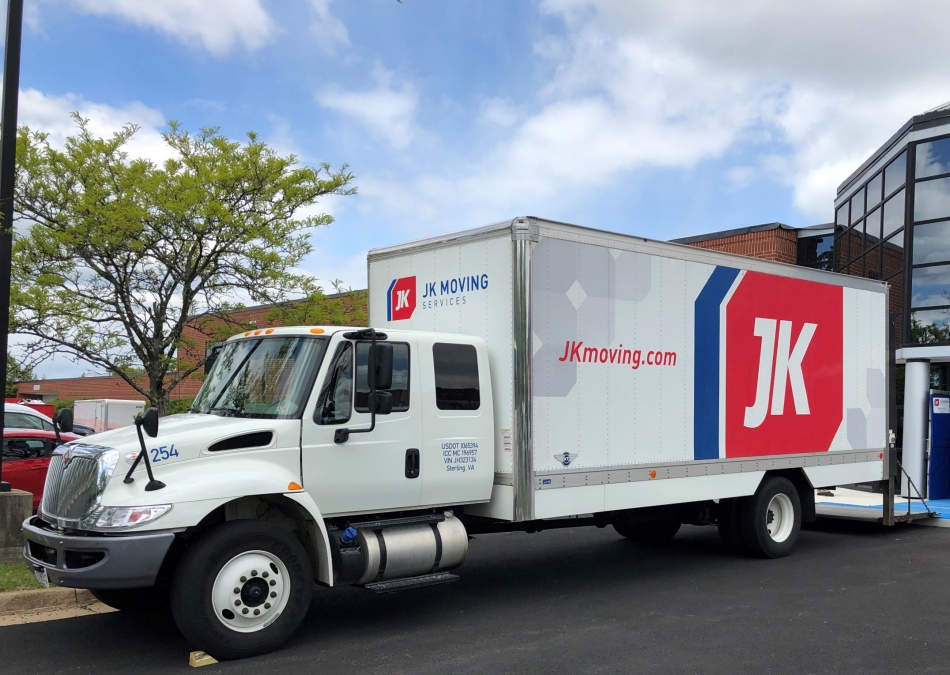 Trucking and freight transportation is where many of these tools originated. Route optimization, driver monitoring, fuel management, and compliance reporting are the core use cases. The scale of data available in over-the-road trucking makes it a natural environment for machine learning to find patterns that humans would miss.
Manufacturing
Manufacturing supply chains have leaned heavily into AI for supply chain resilience and predictive maintenance. When a production line depends on just-in-time delivery, the ability to anticipate disruptions (a supplier delay, a vehicle maintenance issue, a weather event) before they cascade is genuinely valuable. Transportation analytics software helps manufacturing logistics teams model those scenarios and respond before they become crises.
Healthcare
Healthcare logistics has some of the highest stakes of any sector. Critical shipment tracking and real-time inventory visibility aren’t conveniences, they’re patient safety issues. AI-powered logistics tools that provide precise location data and condition monitoring for sensitive medical supplies and pharmaceuticals are increasingly standard for healthcare systems managing complex distribution networks.
Laboratories
Laboratory operations face one of the most demanding cold chain monitoring challenges. Biological samples, reagents, and sensitive research materials have strict temperature requirements that can’t lapse, even briefly, without compromising months or years of work. Connected fleet solutions with IoT sensors make it possible to monitor conditions continuously throughout transport and alert drivers and dispatchers the moment something deviates, before irreplaceable materials are affected.
Furniture, fixtures, and equipment (FF&E)
Furniture, fixtures, and equipment logistics involve coordinating large volumes of high-value items across multiple vendors, delivery windows, and installation schedules, often under tight project timelines. AI-powered logistics tools help FF&E project managers track assets in real time, anticipate delivery sequencing conflicts before they cause delays, and optimize routes dynamically when schedules shift.
For commercial moving and relocation specifically, the relevant applications cluster around fleet safety technology, real-time fleet tracking, and supply chain visibility, ensuring that high-value equipment, sensitive materials, and client assets are tracked, handled, and delivered in ways that clients can verify.
Where AI adoption gets complicated
It would be easy to write about AI in logistics as if adoption is straightforward and the results speak for themselves. They often do, but the path to those results isn’t always smooth, and organizations evaluating these technologies should go in with clear eyes.
Data integration is harder than it looks
Most logistics operations run on a patchwork of legacy systems, and connecting them to modern AI platforms requires time, investment, and organizational patience. The value of logistics data analytics compounds over time, but realizing that value often requires a significant upfront investment in getting data architecture right.
Workforce adoption matters as much as technology selection
The best fleet management software in the world doesn’t improve safety or efficiency if drivers and dispatchers don’t trust it or know how to use it. Organizations that invest in training and transparent communication about how the technology works (and what it’s being used for) tend to see better outcomes than those that deploy and assume adoption will follow.
Data security is a real consideration
Modern fleet vehicles are, as HD Fleet has noted, essentially data hubs. The volume of information being collected and transmitted creates surface area for security risk. Organizations need clear policies around data ownership, retention, and access, particularly when driver behavior data is involved.
Cost and ROI timelines vary
Telematics fleet management and AI safety platforms carry real costs, and the return on investment isn’t always immediate. The 73% crash rate reduction Samsara’s research documents took 30 months to materialize across the fleets studied. Organizations with shorter planning horizons may need to frame the investment differently – around compliance, liability, and risk reduction rather than near-term efficiency gains.
None of these are reasons to avoid the technology. They’re reasons to approach it with a clear plan rather than treating it as a plug-and-play solution.
What this means for organizations hiring commercial carriers
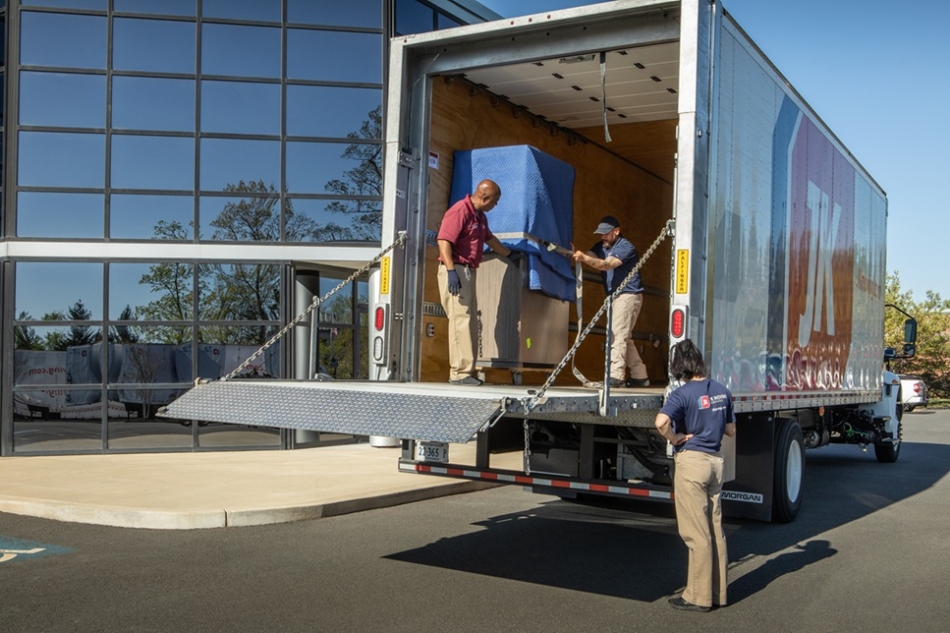 If your organization manages corporate relocations, office moves, or commercial logistics of any kind, you should ask your carrier about the technology it uses. Not because AI is a marketing checkbox, but because it’s a genuine indicator of how seriously a carrier takes driver performance, safety accountability, and operational reliability.
A fleet running AI-enabled monitoring, real-time fleet tracking, and predictive maintenance operates differently than one that isn’t. The drivers are more consistently coached. The safety data is more transparent. The operational visibility is higher. And when something goes wrong (or almost goes wrong) the system captures it and responds.
The questions to ask any commercial carrier: What fleet technology do you run? How do you monitor driver behavior? What does your predictive maintenance program look like? Can you share your safety data?
The carriers with strong answers to those questions have been investing in this infrastructure for years. The technology just makes it easier to see who they are.
Frequently asked questions
How is artificial intelligence transforming logistics operations?
AI is shifting logistics from reactive to predictive across nearly every function: maintenance, routing, safety, demand forecasting, and inventory management. Rather than responding to problems after they occur, AI-powered logistics tools help organizations anticipate and prevent them, reducing downtime, improving delivery performance, and lowering operational costs over time.
What are the benefits of AI-powered logistics for commercial transportation?
The most significant benefits are in safety, efficiency, and visibility. AI fleet management reduces crash rates through real-time driver behavior monitoring and coaching, improves on-time performance through dynamic route optimization, cuts unplanned downtime through predictive maintenance, and gives logistics managers and their clients a clearer real-time picture of where assets are and how they’re performing.
How does AI route planning improve delivery efficiency?
AI route planning goes beyond calculating the shortest path. It incorporates real-time data (live traffic, weather, road restrictions, vehicle specifications) and adjusts continuously throughout the day. The result is fewer delays, lower fuel consumption, and less manual intervention from dispatchers.
How can predictive maintenance reduce fleet downtime?
By continuously monitoring vehicle sensor data (engine performance, brake wear, tire pressure, fuel efficiency) AI systems can identify signs of developing problems before they cause failures. Research suggests this can reduce unplanned breakdowns by up to 47%, which translates directly into fewer service disruptions and more predictable maintenance schedules.
What should companies look for when evaluating a commercial carrier’s technology?
At minimum, ask about fleet safety technology (AI dash cams, in-cab coaching systems), real-time fleet tracking capabilities, predictive maintenance programs, and how driver performance data is monitored and acted on. Carriers who have invested meaningfully in these areas will have clear, specific answers – and verifiable safety records to back them up.
AI and fleet technology in this industry is moving fast. But the underlying question it’s answering is the same one it’s always been: How do you move things (and people) safely, reliably, and on time? Artificial intelligence in logistics is finally giving the industry the tools to answer it better than ever before.